
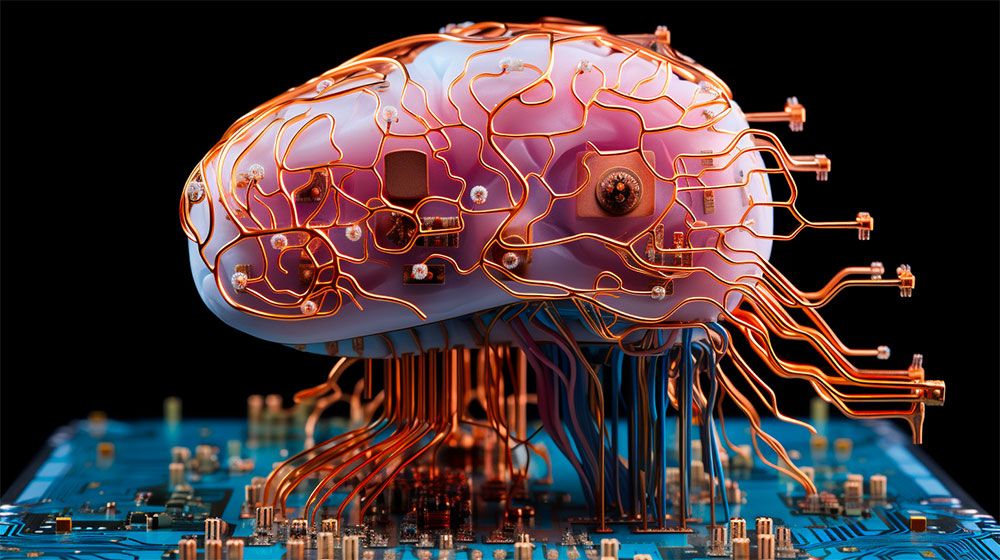
Brain-computer interfaces are no longer science fiction—they’re revolutionizing how we interact with technology, opening unprecedented possibilities for human enhancement and medical breakthroughs.

🧠 The Dawn of Direct Mind-Machine Communication
Imagine controlling your smartphone, typing messages, or even driving a car using nothing but your thoughts. This isn’t a scene from a futuristic movie—it’s happening right now. Brain-computer interfaces (BCIs) represent one of the most transformative technological frontiers of our time, bridging the gap between human consciousness and digital systems in ways that seemed impossible just a decade ago.
The human brain generates electrical signals constantly, with billions of neurons firing in complex patterns every second. Scientists have learned to decode these patterns, translating thoughts into commands that machines can understand. This technological leap is creating opportunities that extend far beyond convenience—it’s offering hope to paralyzed patients, enhancing cognitive abilities, and fundamentally reshaping our relationship with technology.
Recent breakthroughs have accelerated development at an exponential rate. Companies like Neuralink, Synchron, and Kernel are racing to perfect systems that can read neural activity with unprecedented precision. Research institutions worldwide are contributing innovations that push the boundaries of what’s possible, making brain-computer interfaces more accessible, safer, and remarkably more powerful.
🚀 Revolutionary Technologies Transforming Neural Interfaces
The latest generation of BCIs employs multiple approaches, each with unique advantages and applications. Non-invasive systems use external sensors to detect brain activity through the skull, while invasive methods involve surgically implanted electrodes that provide more precise signal reading. Semi-invasive approaches strike a balance, placing sensors inside the skull but outside the brain tissue itself.
Neuralink’s recent demonstrations showcased a patient with paralysis controlling a computer cursor and typing at impressive speeds using only thoughts. The company’s tiny, flexible electrode threads—thinner than human hair—can be implanted with surgical precision by a robot designed specifically for this purpose. This minimizes tissue damage and maximizes signal quality, representing a quantum leap from earlier bulky devices.
Synchron has pioneered a catheter-based approach that doesn’t require open brain surgery. Their Stentrode device is inserted through blood vessels, positioning itself near the motor cortex. This less invasive method has already enabled paralyzed patients to send emails, shop online, and manage their finances independently—activities many thought they’d never perform again.
Wireless Freedom and Miniaturization
Modern BCIs are increasingly wireless, eliminating the infection risks and mobility limitations associated with wired systems. Miniaturization has progressed to the point where entire systems can fit within coin-sized implants. These devices can operate for years on wireless charging, similar to modern smartphones, without requiring battery replacement surgeries.
Machine learning algorithms have dramatically improved signal interpretation. Neural networks can now distinguish between thousands of different thought patterns, learning individual users’ brain signatures with remarkable accuracy. This personalization means BCIs become more responsive over time, adapting to each person’s unique neural architecture.
💡 Life-Changing Medical Applications Happening Now
For individuals with locked-in syndrome, ALS, or spinal cord injuries, BCIs represent liberation from physical imprisonment. Patients who couldn’t communicate for years are now spelling out sentences, expressing emotions, and reconnecting with loved ones. The psychological impact cannot be overstated—these technologies restore agency and dignity to people who had lost both.
A recent case involved a man paralyzed from the neck down who, through a BCI system, regained the ability to “walk” using exoskeleton legs controlled by his thoughts. Sensors detected his intention to move, translating those signals into coordinated movements of robotic limbs. He described the experience as feeling whole again, demonstrating technology’s profound emotional and physical restoration potential.
Stroke rehabilitation is being revolutionized through neurofeedback systems. Patients can see their brain activity in real-time, learning to reactivate dormant neural pathways. This accelerates recovery beyond traditional physical therapy, with some patients regaining motor function thought permanently lost. The brain’s neuroplasticity—its ability to rewire itself—is being harnessed in unprecedented ways.
Restoring Senses and Creating New Ones
Blindness may soon become partially reversible through visual cortex stimulation. Experimental BCIs bypass damaged eyes entirely, sending visual information directly to the brain. While current systems produce rudimentary images, rapid improvements suggest functional vision restoration could become reality within the next decade.
Similarly, cochlear implants—an early form of BCI—have restored hearing to hundreds of thousands of people. Next-generation auditory interfaces promise even better sound quality and more natural hearing experiences, potentially surpassing biological ears in certain frequency ranges or noisy environments.
🎮 Beyond Medicine: Entertainment and Productivity Revolution
The gaming industry is embracing BCIs with enthusiasm. Imagine playing video games where your emotional state affects the storyline, or controlling characters through thought alone. Several companies are developing consumer-grade headsets that detect attention levels, emotional states, and basic commands, creating immersive experiences that respond to players’ mental states.
Productivity applications are equally exciting. Workers could manipulate complex 3D models in design software using mental commands, architects could walk through buildings that exist only in their imagination, and writers could transcribe thoughts directly into text without typing. These aren’t distant fantasies—early versions already exist in laboratories and are approaching commercial viability.
Meditation and mental wellness apps are incorporating BCI technology to provide objective feedback on mental states. Users can see when they’ve achieved deep meditation, track stress levels throughout the day, and receive personalized recommendations based on their neural patterns. This quantified approach to mental health could revolutionize how we understand and manage psychological wellbeing.
Enhanced Learning and Memory
Researchers are exploring whether BCIs could accelerate learning by detecting optimal brain states for information retention. Systems might identify when you’re most receptive to new information, adjusting teaching methods accordingly. Some experiments suggest external stimulation during memory consolidation—the process where short-term memories become long-term—could enhance retention significantly.
Military and aviation applications are testing BCIs for faster pilot training and improved situational awareness. When milliseconds matter, thought-based control offers speed advantages over physical movements. Future fighter pilots might manage weapons systems, communications, and flight controls simultaneously through neural interfaces, dramatically increasing combat effectiveness.
🔬 The Science Behind Reading Thoughts
Understanding how BCIs work requires basic neuroscience knowledge. Neurons communicate through electrical and chemical signals. When you think about moving your arm, specific patterns of neural activity occur in your motor cortex. These patterns generate tiny electrical fields detectable through various methods.
Electroencephalography (EEG) uses scalp electrodes to measure these fields non-invasively. While relatively simple and safe, EEG signals are weak and noisy, limiting precision. Electrocorticography (ECoG) places electrodes directly on the brain surface, capturing cleaner signals with better spatial resolution. Intracortical arrays—like those used by Neuralink—penetrate brain tissue with microscopic electrodes, providing the highest quality signals at the cost of invasiveness.
Signal processing is where computer science meets neuroscience. Raw brain data is incredibly complex—a single channel might generate thousands of data points per second. Advanced algorithms filter noise, identify meaningful patterns, and translate them into commands. Machine learning has revolutionized this process, with AI systems learning to decode intentions with accuracy that improves continuously.
Decoding Complex Thoughts and Intentions
Early BCIs could only distinguish between a few simple commands—left, right, select. Modern systems recognize hundreds of distinct intentions. Researchers recently demonstrated a BCI that could decode imagined handwriting with remarkable accuracy. Participants simply thought about writing letters, and the system transcribed their mental handwriting at speeds approaching normal typing.
Even more impressively, experiments have decoded imagined speech. Scientists recorded brain activity while people silently thought words, then used AI to reconstruct those words. Accuracy isn’t perfect yet, but the implications are staggering—true telepathic communication might be achievable within our lifetimes.
⚖️ Ethical Considerations and Privacy Concerns
With great power comes great responsibility, and BCIs raise profound ethical questions. Who owns your brain data? If a company can read your thoughts, what prevents them from exploiting that information? Neural privacy may become the defining civil rights issue of the 21st century, requiring new legal frameworks and protections we’re only beginning to conceptualize.
Consent becomes complicated with BCIs. If a device can influence your thoughts or emotions, how do we ensure autonomy? Research shows external stimulation can affect decision-making, mood, and even moral judgments. The potential for manipulation—whether commercial, political, or personal—demands rigorous safeguards and transparent regulations.
Inequality concerns are equally pressing. If BCIs enhance cognitive abilities, will they become privileges of the wealthy, creating a two-tiered society of augmented and non-augmented humans? History suggests transformative technologies often deepen existing divides before becoming accessible. Ensuring equitable access to neural enhancement technologies should be a priority as the field matures.
Security Risks and Hacking Concerns
Cybersecurity takes on new meaning when devices interface directly with your brain. Could hackers access your BCI, stealing private thoughts or implanting false memories? While current systems lack the sophistication for such scenarios, future interfaces might be vulnerable. Researchers are developing neural encryption methods and security protocols specifically for brain-computer interfaces.
The military and intelligence applications of BCIs raise additional concerns. Enhanced soldiers with superior reaction times and situational awareness could shift warfare dynamics. The possibility of thought surveillance or forced neural interrogation presents nightmarish scenarios that international law hasn’t adequately addressed.
🌍 Global Research Leaders Pushing Boundaries
Brain-computer interface research is truly global. The United States leads in private sector investment, with companies like Neuralink, Kernel, and CTRL-labs (acquired by Facebook) attracting billions in funding. Silicon Valley sees BCIs as the next major computing platform after smartphones, positioning to dominate this emerging market.
Europe emphasizes medical applications and ethical frameworks, with the European Union funding extensive BCI research through Horizon programs. Projects like the Human Brain Project aim to simulate entire brains digitally, advancing fundamental understanding of neural computation.
China has invested heavily in BCI technology, both for medical applications and military enhancement. Several Chinese companies are developing consumer BCIs for education and entertainment, with less regulatory oversight than Western counterparts. This creates both rapid innovation and potential ethical concerns.
Academic Institutions Driving Innovation
Universities worldwide contribute fundamental research. Stanford’s Neural Prosthetics Translational Laboratory has pioneered techniques for converting brain signals into typed text. Duke University’s Center for Neuroengineering demonstrated monkeys controlling robotic arms through thought alone—research that paved the way for human applications.
Collaborative networks are accelerating progress. Open-source BCI platforms allow researchers globally to share data, algorithms, and hardware designs, democratizing innovation and preventing any single entity from controlling this transformative technology.
🔮 The Next Frontier: What’s Coming in the Next Decade
The next ten years promise developments that seem almost magical. Bidirectional BCIs—systems that both read from and write to the brain—could enable experiences impossible through natural senses. Imagine downloading information directly into your memory, or experiencing another person’s sensory perceptions through neural connection.
Brain-to-brain interfaces have already been demonstrated experimentally. Researchers connected two people’s brains, allowing one to control the other’s hand movements through thought alone. While crude, this “brain net” concept could evolve into new forms of communication that transcend language, enabling direct thought sharing between individuals.
Cognitive enhancement through neural stimulation might become commonplace. Already, transcranial magnetic stimulation shows promise for improving focus, memory, and creativity. Future BCIs could optimize brain function dynamically, adjusting neural activity in real-time to enhance whatever task you’re performing.
Integration with Artificial Intelligence
The convergence of BCIs and AI represents perhaps the most transformative possibility. Imagine accessing artificial intelligence not through a screen but directly through thought. Your brain could offload complex calculations to AI systems, essentially expanding your cognitive capacity beyond biological limits. This symbiosis between human and artificial intelligence could redefine what it means to be human.
Some futurists predict BCIs will enable consciousness uploading—transferring your mind into digital form. While highly speculative and fraught with philosophical questions about identity and continuity, the concept illustrates how radically BCIs might transform human existence.
💪 How You Can Engage with BCI Technology Today
Consumer BCIs are already available, though capabilities are limited compared to research systems. Devices like Muse, Emotiv, and NeuroSky offer EEG-based headsets for meditation, focus training, and simple applications. While not capable of detailed thought reading, these products provide entry points for experiencing brain-computer interfacing firsthand.
Following BCI research helps you stay informed about this rapidly evolving field. Many researchers share findings through accessible channels—podcasts, YouTube lectures, and social media. Understanding the technology, its potential, and its limitations allows informed participation in inevitable societal discussions about regulation and implementation.
For students and professionals, BCI represents an exciting career frontier. Neuroscience, computer science, electrical engineering, ethics, and law all play crucial roles in developing this technology responsibly. Interdisciplinary expertise is particularly valuable, as BCIs require integration of diverse knowledge domains.
🌟 Embracing the Neural Revolution Responsibly
Brain-computer interfaces stand at the intersection of humanity’s greatest hopes and deepest concerns. They promise to heal the sick, enhance human capabilities, and create experiences beyond current imagination. Simultaneously, they raise fundamental questions about privacy, identity, equity, and what it means to be human in an age of technological enhancement.
The breakthroughs happening today will define tomorrow’s world. Paralyzed individuals gaining independence, stroke victims recovering lost functions, and new forms of human-computer interaction becoming reality—these aren’t incremental improvements but transformative changes to human potential and experience.
As this technology matures, societal choices will determine whether BCIs become tools of liberation or control, whether they reduce inequality or deepen it, whether they enhance humanity or fundamentally alter it. Staying informed, engaging in ethical discussions, and demanding responsible development ensures that brain-computer interfaces fulfill their extraordinary promise while respecting human dignity and rights.
The future is being written in neural code, and the most exciting chapters are just beginning. Whether you’re a potential user, a researcher, a policymaker, or simply a curious observer, the neural revolution will impact your life. Understanding these technologies today prepares you for the mind-bending possibilities of tomorrow—possibilities that are rapidly transitioning from science fiction to scientific fact. 🚀
