
Imagine a world where thoughts travel instantly between minds, bypassing words entirely. This extraordinary vision is rapidly becoming reality through groundbreaking telepathic technology prototypes.

🧠 The Dawn of Mind-to-Mind Communication Technology
The concept of telepathy has captivated human imagination for centuries, appearing in mythology, science fiction, and philosophical discourse. Today, however, we stand at the threshold of transforming this fantastical notion into tangible reality. Researchers worldwide are developing sophisticated brain-computer interfaces (BCIs) and neural communication systems that could fundamentally reshape how we exchange information, emotions, and ideas.
Recent advances in neuroscience, artificial intelligence, and bioengineering have converged to create unprecedented opportunities for direct brain-to-brain communication. What seemed impossible just decades ago is now being tested in laboratories across the globe, with results that both astound and challenge our understanding of human connectivity.
Understanding the Science Behind Telepathic Prototypes
Modern telepathic technology doesn’t rely on mystical powers or supernatural abilities. Instead, it harnesses our growing understanding of neural activity and sophisticated computational algorithms. When we think, our neurons fire in specific patterns that generate measurable electrical signals. These signals can be detected, interpreted, and potentially transmitted to another person’s brain.
The Neural Foundation of Thought Transmission
Every thought, emotion, and intention originates from electrochemical activity in our brains. Advanced neuroimaging technologies like functional magnetic resonance imaging (fMRI), electroencephalography (EEG), and magnetoencephalography (MEG) allow scientists to observe and map these neural patterns with increasing precision.
The key breakthrough lies in developing algorithms capable of decoding these patterns into meaningful information. Machine learning models trained on vast datasets of brain activity can now identify specific thought patterns associated with particular words, images, or concepts. This translation between neural signals and comprehensible information forms the foundation of telepathic communication systems.
Current Prototype Technologies and Approaches
Several distinct approaches are emerging in the development of telepathic communication devices. Non-invasive systems use external sensors to detect brain activity through the skull, offering safer implementation but with limited signal quality. Invasive systems involve surgically implanted electrodes that provide much clearer signals but carry inherent medical risks.
Hybrid approaches attempt to balance these trade-offs, using minimally invasive techniques or enhanced external sensing capabilities. Each methodology presents unique advantages and challenges that researchers continue to refine through iterative development and testing.
🔬 Breakthrough Experiments Reshaping Communication
The past decade has witnessed remarkable demonstrations of brain-to-brain communication that would have seemed miraculous to previous generations. In 2013, researchers at the University of Washington successfully transmitted a simple brain signal from one researcher to another across campus, enabling one person to control another’s hand movement using only thought.
More recently, scientists have achieved direct brain-to-brain communication of complex information including words, mathematical concepts, and even emotional states. These experiments, while still conducted under controlled laboratory conditions, provide compelling proof-of-concept for practical telepathic systems.
The BrainNet Collaborative System
One particularly fascinating development is BrainNet, the first multi-person non-invasive direct brain-to-brain interface for collaborative problem-solving. This system allows three people to collaborate on tasks using direct brain-to-brain communication, successfully demonstrating that groups can work together through thought transmission alone.
Participants in BrainNet experiments play collaborative games where players must communicate without speaking, typing, or using any conventional method. The system records brain activity from two “senders” who can see a game screen, then transmits their decisions directly to a “receiver” who cannot see the screen but must make decisions based solely on the brain signals received.
Revolutionary Applications Across Industries 🚀
The potential applications of telepathic communication technology extend far beyond novelty or academic curiosity. Numerous industries stand to be fundamentally transformed by direct brain-to-brain communication capabilities.
Healthcare and Medical Rehabilitation
For individuals who have lost the ability to speak due to stroke, ALS, or other neurological conditions, telepathic interfaces offer hope for restored communication. Several prototypes already enable locked-in patients to communicate thoughts directly to text or speech synthesis systems, dramatically improving quality of life.
Rehabilitation programs could leverage brain-to-brain interfaces to help patients relearn motor skills by directly experiencing correct neural patterns from therapists or advanced AI systems. This direct neural training could accelerate recovery from brain injuries and neurological disorders.
Education and Skill Transfer
Imagine downloading knowledge directly into your brain, similar to scenes from science fiction films. While we’re not quite there yet, telepathic technology could revolutionize education by enabling more efficient knowledge transfer. Complex concepts might be transmitted as complete neural patterns rather than requiring lengthy verbal explanation and repetitive practice.
Specialized skills that currently require years of training might become transmissible in compressed timeframes, democratizing expertise and accelerating human capability development across populations.
Emergency Response and Military Operations
In high-stakes situations where verbal communication may be impossible, compromised, or too slow, telepathic systems could save lives. Firefighters in smoke-filled buildings, soldiers in combat zones, or astronauts in challenging space environments could maintain silent, reliable communication regardless of environmental conditions.
The speed advantage of thought-based communication over traditional methods could prove decisive in time-critical scenarios where milliseconds matter.
⚡ Technical Challenges and Current Limitations
Despite remarkable progress, significant technical hurdles remain before telepathic communication becomes practical for everyday use. Signal quality, interpretation accuracy, transmission speed, and hardware portability all require substantial improvement.
Signal Noise and Accuracy Issues
Brain signals are inherently noisy, containing vast amounts of information beyond the specific thought being transmitted. Distinguishing the intended signal from background neural activity presents ongoing challenges. Current systems achieve accuracy rates that, while impressive for proof-of-concept, remain insufficient for reliable practical communication.
Environmental interference, individual neurological differences, and the sheer complexity of brain activity create additional obstacles. Machine learning algorithms must be trained individually for each user, and even then, interpretation errors occur with concerning frequency.
Bandwidth and Transmission Speed Limitations
Current telepathic prototypes transmit information at rates far slower than conventional communication methods. While humans can speak 120-150 words per minute or type 40-80 words per minute, experimental brain-to-brain systems typically achieve transmission rates of only 2-5 bits per minute.
Overcoming these bandwidth limitations requires advances in both signal detection technologies and computational processing capabilities. Researchers are exploring various approaches including improved electrode arrays, enhanced algorithms, and novel transmission protocols.
Ethical Considerations and Privacy Concerns 🔐
The prospect of direct access to human thoughts raises profound ethical questions that society must address before widespread adoption of telepathic technologies. Privacy concerns stand paramount among these considerations.
Mental Privacy and Cognitive Liberty
If devices can read and transmit thoughts, what protections exist against unwanted mental surveillance? The concept of cognitive liberty—the right to mental self-determination and privacy of thought—becomes critically important in a world with telepathic technology.
Legal frameworks must evolve to establish clear boundaries around mental privacy rights, consent requirements for thought transmission, and penalties for unauthorized access to neural information. These protections must balance innovation benefits against fundamental human rights.
Authentication and Identity Verification
How do we ensure that transmitted thoughts genuinely originate from the claimed source? Brain-to-brain communication systems must incorporate robust authentication mechanisms to prevent impersonation, manipulation, or hijacking of mental communications.
The potential for deepfake-style manipulation of neural signals presents disturbing possibilities that security researchers must proactively address through cryptographic and authentication technologies specifically designed for neural communication channels.
🌍 Social and Cultural Implications
Beyond technical and ethical considerations, telepathic communication would fundamentally alter human social dynamics, cultural practices, and even our conception of individual identity.
Language Evolution and Cross-Cultural Communication
If thoughts can be transmitted directly, language barriers might eventually disappear. A Japanese speaker and a Spanish speaker could potentially understand each other’s thoughts directly, translated automatically at the neural level. This could foster unprecedented global understanding and cooperation.
However, language carries cultural nuances, idioms, and contextual meanings that pure thought transmission might lose. The richness of linguistic diversity could diminish if neural communication replaces traditional language use.
Redefined Relationships and Intimacy
Human relationships could transform dramatically when partners can share thoughts directly. Perfect mutual understanding might be achieved, eliminating miscommunication and deepening emotional connections. Alternatively, such transparency might prove overwhelming, removing the mystery and privacy that many consider essential to healthy relationships.
Social norms would need to evolve regarding when telepathic communication is appropriate, how much mental sharing is expected in various relationships, and how to maintain individuality within hyper-connected communities.
The Commercialization Timeline and Market Potential 💼
While fully functional consumer telepathic devices remain years or decades away, the commercialization process has already begun. Several companies are developing brain-computer interface products with communication capabilities, attracting substantial investment from both venture capital and established technology corporations.
Near-Term Commercial Offerings
The first commercial products will likely focus on assistive applications for individuals with communication disabilities, where the technology can provide life-changing benefits despite current limitations. These specialized markets will help fund continued research while building consumer acceptance.
Gaming and entertainment applications may follow, offering novel experiences that leverage limited telepathic capabilities in controlled environments. Virtual reality combined with brain-interface technology could create immersive experiences where thoughts control digital environments and enable new forms of multiplayer interaction.
Long-Term Market Transformation
If telepathic communication achieves reliability and accessibility comparable to smartphones, entire industries could pivot toward neural-interface paradigms. The global telecommunications industry, currently valued at over two trillion dollars, would face fundamental restructuring.
New markets would emerge around neural interface hardware, thought-based applications, brain-data security services, and neural communication infrastructure. Economic forecasts suggest the brain-computer interface market could reach hundreds of billions of dollars within several decades.
🔮 Envisioning the Telepathic Future
Looking forward, we can imagine multiple scenarios for how telepathic communication might integrate into human civilization. The optimistic vision sees technology enhancing human connection, reducing conflict through perfect understanding, and elevating collective intelligence to solve global challenges.
In this future, children grow up with natural access to both verbal and telepathic communication modes, developing unprecedented empathy and collaborative capabilities. Scientific progress accelerates as researchers share complex ideas instantly. Creative collaboration reaches new heights as artists, musicians, and writers share inspiration directly mind-to-mind.
Potential Challenges in a Telepathic Society
Alternative scenarios present cautionary possibilities. Societies might fracture between those with access to advanced telepathic technology and those without, creating new forms of inequality. Mental privacy could become a luxury of the wealthy, while others face constant neural surveillance.
Authoritarian regimes might exploit telepathic technology for thought control or population monitoring. The technology could be weaponized, causing psychological harm through unwanted mental intrusions or manipulated neural signals.
Preparing for the Telepathic Revolution 🎯
Whether telepathic communication arrives in ten years or fifty, preparing for this transformation requires action today. Educational systems should begin teaching neural literacy alongside traditional language skills. Policymakers must develop regulatory frameworks that balance innovation with protection of fundamental rights.
Individuals can prepare by developing stronger metacognitive awareness—understanding our own thought processes and mental patterns. In a telepathic future, clear thinking and mental discipline may become as important as clear speaking is today.
The scientific community must maintain rigorous ethical standards throughout development, ensuring that telepathic technologies enhance rather than diminish human dignity, autonomy, and flourishing. Public dialogue about these technologies should expand beyond academic circles to include diverse perspectives from all sectors of society.
The Convergence of Biology and Technology
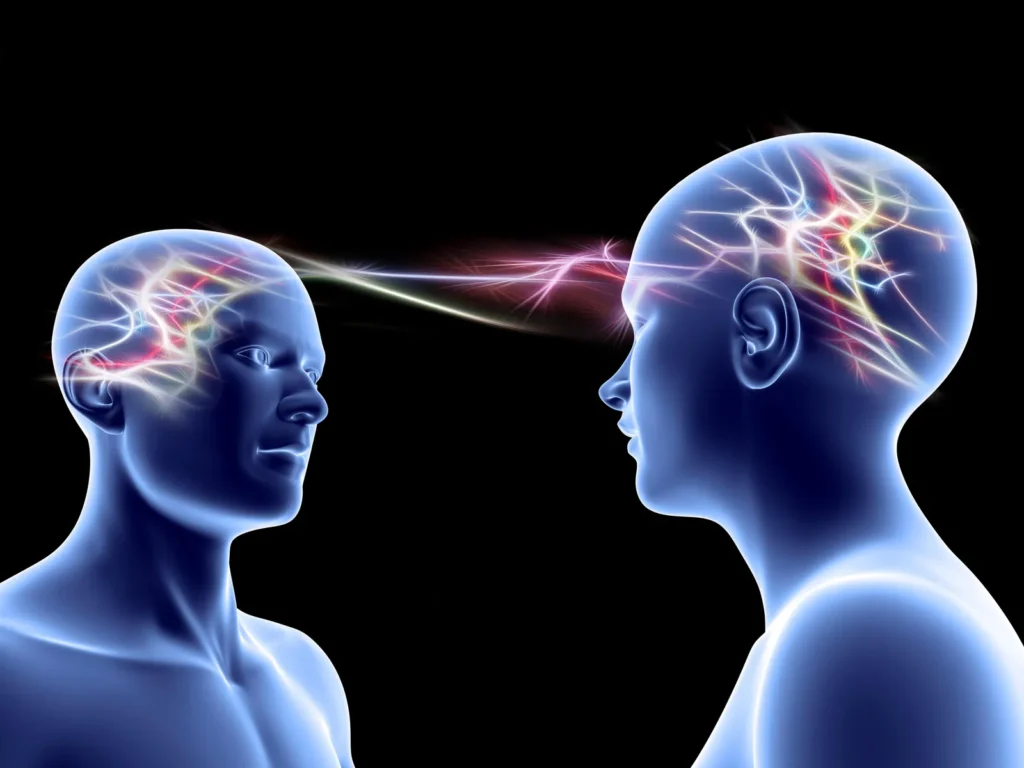
Telepathic communication represents just one aspect of the broader convergence between biological systems and technological capabilities. As we develop increasingly sophisticated interfaces between minds and machines, the boundary between natural and artificial intelligence becomes less distinct.
This convergence challenges traditional concepts of human identity, consciousness, and capability. Are we still fully human if our thoughts flow through technological intermediaries? Does shared neural experience create a form of collective consciousness that transcends individual identity?
These philosophical questions lack easy answers, yet they demand serious consideration as telepathic technologies advance from laboratory curiosities toward practical implementation. Our responses to these questions will shape not only the technology itself but the future trajectory of human evolution.
The revolution in communication through telepathic prototypes represents one of humanity’s most ambitious technological frontiers. Success would fundamentally transform every aspect of human experience—from intimate relationships to global cooperation, from education to entertainment, from healthcare to commerce. The challenges are immense, spanning technical complexity, ethical concerns, and social adaptation. Yet the potential rewards—deeper understanding, enhanced collaboration, and transcendence of communication barriers—motivate continued innovation and investment.
As we stand at this technological threshold, we must proceed thoughtfully, ensuring that telepathic communication technologies serve humanity’s highest aspirations while protecting the cognitive freedoms and mental privacy that define our humanity. The future of communication is being written today in laboratories worldwide, and that future promises to be extraordinary beyond our current imagination. 🌟
