The human brain remains one of science’s greatest frontiers, and brain mapping projects are revolutionizing how we understand this complex organ. 🧠

For centuries, scientists have dreamed of creating a comprehensive map of the brain’s intricate networks. Today, that dream is becoming reality through ambitious brain mapping and connectome projects that are unveiling the mysteries of neural connections, cognitive functions, and the very essence of what makes us human. These groundbreaking initiatives combine neuroscience, advanced imaging technologies, artificial intelligence, and international collaboration to chart the brain’s vast territories in unprecedented detail.
The Foundation: What Is Brain Mapping?
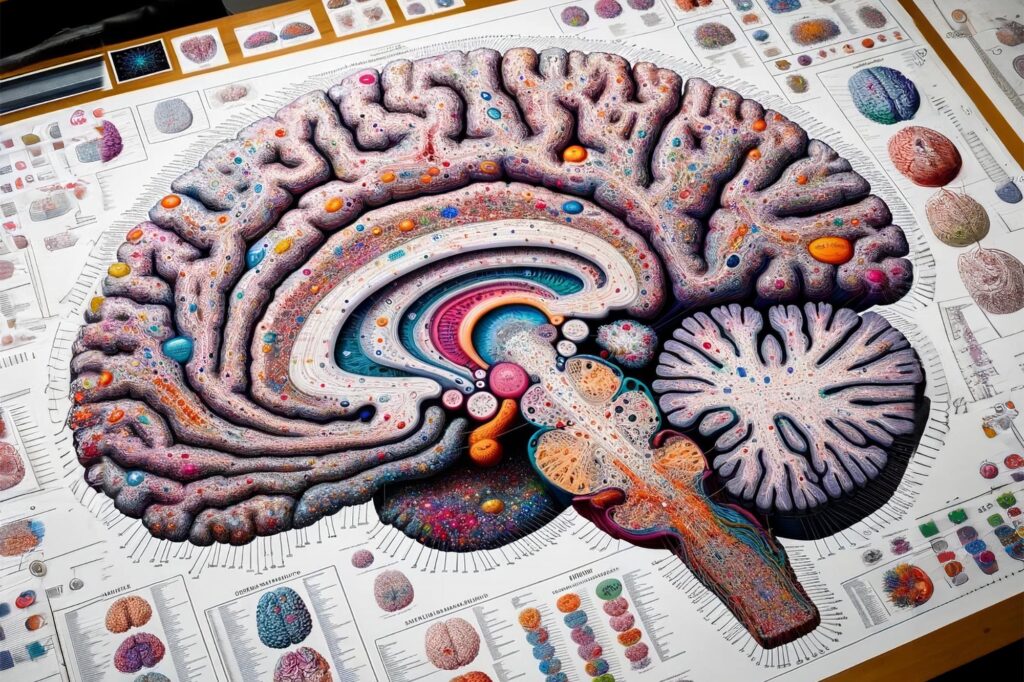
Brain mapping refers to the neuroscience techniques used to quantify and visualize the structure and function of the brain. Unlike traditional anatomical studies that focused on broad regions, modern brain mapping aims to understand the brain at multiple scales—from individual neurons to large-scale networks spanning the entire organ.
These mapping efforts employ various technologies including functional magnetic resonance imaging (fMRI), positron emission tomography (PET), electroencephalography (EEG), and increasingly sophisticated microscopy techniques. Each method provides different insights: some reveal which brain areas activate during specific tasks, while others trace the physical connections between neurons with microscopic precision.
The ultimate goal extends beyond simple cataloging. Researchers seek to understand how billions of neurons communicate, form networks, and generate thoughts, emotions, memories, and behaviors. This knowledge promises to transform treatment for neurological disorders, enhance artificial intelligence development, and answer fundamental questions about consciousness itself.
Understanding the Connectome: The Brain’s Wiring Diagram 🔌
The connectome represents the complete map of neural connections in the brain—essentially a wiring diagram showing how neurons and brain regions interconnect. Think of it as the brain’s “circuit board,” where understanding the connections is as crucial as identifying the components.
Mapping the human connectome presents extraordinary challenges. The brain contains approximately 86 billion neurons, each potentially connected to thousands of others through synapses. This creates a network of staggering complexity, with an estimated 100 trillion connections forming the substrate of human cognition.
Connectome research operates at different scales. Microscale connectomics examines individual neurons and synapses, requiring electron microscopy to visualize structures measured in nanometers. Macroscale connectomics studies connections between brain regions, using MRI-based techniques that can be performed on living humans. Each approach offers unique insights into how the brain’s architecture supports its remarkable functions.
Why Connectomes Matter for Medicine and Beyond
Understanding brain connectivity has profound implications for treating neurological and psychiatric conditions. Many disorders—including Alzheimer’s disease, schizophrenia, autism spectrum disorders, and depression—involve disrupted neural networks rather than damage to isolated brain regions.
By comparing connectomes of healthy individuals with those affected by various conditions, researchers identify specific connectivity patterns associated with disease. This knowledge enables earlier diagnosis, more targeted treatments, and better understanding of how disorders progress. For instance, studies have revealed that autism involves altered connectivity in social processing networks, while Alzheimer’s disease systematically dismantles memory-related connections.
Beyond medicine, connectome research informs artificial intelligence development. Neural networks in machine learning were initially inspired by brain architecture, and detailed connectome maps provide blueprints for creating more sophisticated AI systems that better mimic human cognitive abilities.
Major Brain Mapping Initiatives Around the World 🌍
Several large-scale projects are leading the charge in brain mapping, each with distinct approaches and goals. These collaborative efforts represent investments of billions of dollars and involve thousands of researchers worldwide.
The Human Connectome Project
Launched in 2009 by the U.S. National Institutes of Health, the Human Connectome Project (HCP) aimed to map the neural pathways that underlie human brain function. The project collected brain imaging data from over 1,200 healthy adults using advanced MRI techniques, creating the most detailed maps of brain connectivity in living humans.
The HCP’s data has been made publicly available, enabling researchers globally to study brain connectivity patterns. This open-access approach has accelerated discoveries about how individual differences in brain wiring relate to cognitive abilities, personality traits, and susceptibility to mental health conditions. Follow-up initiatives now extend this work to development, aging, and disease.
The BRAIN Initiative
The Brain Research through Advancing Innovative Neurotechnologies (BRAIN) Initiative, announced in 2013, represents an ambitious U.S. effort to revolutionize understanding of the human brain. Rather than focusing solely on mapping, BRAIN Initiative develops new technologies for recording and manipulating neural activity.
This project has funded development of innovative tools including optogenetics (using light to control neurons), advanced imaging techniques that can monitor thousands of neurons simultaneously, and methods for analyzing vast amounts of neural data. These technologies enable researchers to not just map brain structures, but observe how neural networks function in real-time.
The Human Brain Project
Europe’s flagship neuroscience initiative, the Human Brain Project, combines brain mapping with computational modeling. This ten-year project, launched in 2013, aims to create a digital reconstruction of the human brain—a simulation that could test hypotheses about brain function without requiring human or animal experiments.
The project integrates data from multiple sources to build computational models at different scales, from molecular interactions to whole-brain networks. While ambitious and controversial, this approach could eventually enable researchers to simulate neurological disorders and test treatments virtually before clinical trials.
C. elegans: The Complete Connectome Success Story
The most complete connectome mapped to date belongs not to humans, but to a tiny roundworm called Caenorhabditis elegans. With exactly 302 neurons, this organism became the first to have its entire neural network fully mapped—a feat accomplished in 1986 and refined continuously since.
Despite the worm’s simplicity compared to human brains, this connectome has provided invaluable insights into how neural networks generate behavior. Researchers can observe how signals propagate through the worm’s nervous system and predict behaviors based on connectivity patterns. This work serves as a proof-of-concept that complete connectomes can yield transformative understanding of nervous system function.
Technologies Powering the Mapping Revolution 🔬
Recent advances in brain mapping stem from convergence of multiple technological breakthroughs, each enabling researchers to see the brain with unprecedented clarity and detail.
Advanced Imaging Techniques
Modern neuroimaging has evolved far beyond early CT and MRI scans. Diffusion tensor imaging (DTI) tracks water molecule movement to reveal the brain’s white matter tracts—the neural “highways” connecting different regions. Functional MRI detects blood flow changes indicating neural activity, allowing researchers to observe which brain areas activate during specific mental tasks.
For microscale mapping, electron microscopy achieves the nanometer resolution necessary to visualize individual synapses. Recent automated techniques can now section brain tissue into thousands of ultra-thin slices, image each slice with electron microscopes, and computationally reconstruct three-dimensional neural structures. This process generates petabytes of data requiring sophisticated analysis.
Artificial Intelligence and Data Analysis
The sheer volume of data generated by brain mapping projects exceeds human analysis capacity. A single connectome dataset can contain millions of images requiring identification and tracing of billions of neural connections—a task impossible without artificial intelligence.
Machine learning algorithms now automatically identify neurons in microscopy images, trace their connections, and detect patterns in functional imaging data. These AI systems continue improving as they process more data, accelerating the mapping process and enabling discoveries that would otherwise remain hidden in massive datasets.
Optogenetics and Activity Monitoring
Understanding brain function requires more than static maps; researchers need to observe neural activity in living organisms. Optogenetics uses light-sensitive proteins to control specific neurons, allowing scientists to activate or silence neural populations and observe resulting behavioral changes.
Complementing optogenetics, genetically encoded calcium indicators enable researchers to monitor neural activity by detecting calcium influx that accompanies neuronal firing. Advanced microscopy can now simultaneously track activity of thousands of neurons in behaving animals, revealing how neural networks coordinate to produce complex behaviors.
Challenges on the Road to Comprehensive Brain Maps 🚧
Despite remarkable progress, brain mapping faces substantial obstacles that will require years or decades to overcome.
Scale and Complexity
The human brain’s complexity defies easy comprehension. Mapping every neuron and connection would generate data measured in exabytes—millions of terabytes. Processing, storing, and analyzing such enormous datasets strains current computational infrastructure. Moreover, brains aren’t static; connections constantly change through learning and experience, adding temporal dimensions to already overwhelming spatial complexity.
Individual Variation
No two brains are identical. While broad organizational principles apply across individuals, connectivity details vary substantially based on genetics, experiences, and countless other factors. This variability means that a single “standard” brain map, while useful, cannot fully represent the diversity of human neural architecture. Research must account for individual differences while identifying common patterns.
Ethical Considerations
As brain mapping advances, ethical questions become increasingly pressing. Detailed brain maps might reveal information about individuals’ cognitive abilities, psychological traits, or disease risks—raising privacy concerns. The potential to manipulate brain activity using insights from mapping projects demands careful consideration of appropriate applications and safeguards against misuse.
From Maps to Meaning: Interpreting Connectivity Patterns 📊
Creating a map represents only the first step; understanding what it reveals requires sophisticated interpretation. Researchers employ network science principles to analyze brain connectivity, revealing organizational principles that weren’t apparent from studying isolated regions.
Brain networks exhibit “small-world” properties—meaning most regions can communicate through relatively few intermediate connections, enabling efficient information transfer. They also display modularity, with neurons grouped into communities that process related information. Hub regions serve as critical integration points, connecting multiple networks and coordinating brain-wide activity.
These network properties have functional consequences. Highly connected hub regions, while enabling efficient coordination, also represent vulnerability points—damage to hubs produces more severe impairments than damage to less connected regions. Understanding these architectural principles helps explain why certain brain injuries cause specific cognitive deficits.
Real-World Applications Emerging from Brain Mapping 💡
Brain mapping research is already yielding practical applications that extend beyond academic laboratories into clinical practice and technology development.
Precision Medicine in Neurology
Detailed brain maps enable personalized treatment approaches. Surgeons planning operations for epilepsy or brain tumors now use individual connectivity maps to avoid damaging critical pathways. This precision reduces surgical complications and improves outcomes by preserving essential neural connections while removing problematic tissue.
For psychiatric conditions, connectivity patterns help predict which patients will respond to specific treatments. Depression, for instance, shows heterogeneous connectivity alterations, with different patterns responding better to medication versus psychotherapy. Mapping individual connectivity could guide treatment selection, improving success rates.
Brain-Computer Interfaces
Understanding neural connectivity patterns is crucial for developing brain-computer interfaces (BCIs) that enable direct communication between brains and external devices. Current BCIs help paralyzed individuals control robotic limbs or computer cursors using brain signals. As connectivity maps improve, these interfaces will become more intuitive and capable, potentially restoring mobility and communication to people with severe disabilities.
Educational Neuroscience
Brain mapping reveals how learning physically changes neural connections—insights that inform educational approaches. Understanding which connectivity patterns support successful learning helps educators design more effective teaching methods. Research shows that different subjects engage distinct neural networks, suggesting that varied instructional approaches suit different content types.
The Exciting Future: Where Brain Mapping Is Headed 🚀
The next decades promise even more dramatic advances as technologies mature and datasets accumulate. Several frontiers appear particularly promising for transformative discoveries.
Whole-Brain Activity Mapping
Current technologies image either small neural populations at high resolution or large brain areas at low resolution. Emerging techniques aim to simultaneously monitor every neuron’s activity across entire brains—initially in small animals like mice, eventually in larger mammals. This would reveal how brain-wide coordination produces complex behaviors and cognitive processes.
Dynamic Connectomes
Most current connectome maps represent snapshots of brain connectivity at single timepoints. Future research will track how connections change during learning, development, and disease progression. Dynamic connectomes will reveal mechanisms of brain plasticity and identify intervention windows when treatments could most effectively modify maladaptive connectivity patterns.
Integration Across Scales
Bridging the gap between microscale synaptic connections and macroscale brain networks remains a major challenge. Future projects will integrate data across scales, showing how molecular processes at synapses aggregate to produce network-level phenomena. This multilevel understanding is essential for comprehending how genetics influence brain architecture and function.
Transforming Our Understanding of What Makes Us Human 🌟
Brain mapping and connectome projects represent more than technical achievements—they’re helping answer profound questions about human nature. How do physical neural connections generate subjective experiences? What makes each person’s mind unique? How does consciousness emerge from biological tissue?
While complete answers remain distant, mapping projects provide essential foundations for addressing these mysteries. Each mapped connection, each discovered network principle, and each technological advance brings us closer to comprehending the brain’s remarkable capabilities.
The implications extend beyond neuroscience. Philosophy, psychology, artificial intelligence, medicine, education, and law all stand to be transformed by deeper understanding of brain connectivity. As maps become more complete and interpretations more sophisticated, this knowledge will reshape how humans understand themselves and their place in the natural world.
The journey to fully map and understand the human brain will likely continue throughout this century and beyond. Yet the progress already achieved demonstrates that this grand challenge, once seeming impossibly ambitious, is gradually yielding to persistent scientific effort. The mysteries of the mind are being unlocked, one connection at a time, revealing the extraordinary biological machinery that enables human thought, emotion, and consciousness.
As these projects advance, they remind us that the most complex object in the known universe resides within our own skulls—and that understanding it represents one of humanity’s most worthwhile endeavors. The brain mapping revolution has only begun, and its ultimate impact on human knowledge and capability may well exceed even our most optimistic predictions.
