
Our brains are becoming data sources. As neurotechnology advances rapidly, protecting the intimate information generated by our neural activity has become one of humanity’s most pressing challenges.

🧠 The Dawn of Neural Data Collection
We stand at the threshold of a revolutionary era where brain-computer interfaces are transitioning from science fiction to everyday reality. Companies like Neuralink, Synchron, and numerous startups are developing technologies that can read, interpret, and even influence neural signals. These innovations promise incredible benefits for medical treatment, communication, and human enhancement, but they also open unprecedented vulnerabilities in our most private domain: our thoughts.
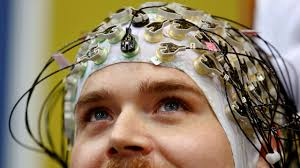
Neural data encompasses the electrical signals, patterns, and biomarkers generated by brain activity. Unlike traditional biometric data such as fingerprints or facial recognition, neural information can potentially reveal cognitive states, emotional responses, mental health conditions, personal preferences, and even predict future behaviors. This makes it exponentially more sensitive than any data category we’ve previously encountered.
The market for brain-computer interfaces is projected to reach $5.46 billion by 2030, with consumer-grade devices already available for meditation tracking, sleep optimization, and gaming. This rapid commercialization is outpacing our regulatory frameworks, creating a dangerous gap between technological capability and legal protection.
Understanding What’s at Stake: The Uniqueness of Neural Privacy
Neural privacy differs fundamentally from conventional data privacy concerns. While we can change passwords, update security questions, or even alter our online behaviors, we cannot simply modify our brain patterns. Neural data is immutable, continuous, and profoundly revealing. It represents the last frontier of human privacy—the inner workings of consciousness itself.
Research has demonstrated that neural data can reveal information individuals might not consciously acknowledge or wish to disclose. Studies show that brain activity patterns can indicate:
- Political affiliations and ideological leanings
- Sexual orientation and romantic preferences
- Susceptibility to addiction or mental health disorders
- Cognitive abilities and intellectual capacity
- Deceptive intentions or truthfulness
- Subconscious biases and prejudices
- Memory content and formation processes
The implications of this information falling into the wrong hands—whether malicious actors, authoritarian governments, or profit-driven corporations—are staggering. We’re discussing the potential for cognitive manipulation, discrimination based on neurological profiles, and surveillance that extends beyond actions into the realm of thought itself.
🔒 Current Landscape: Where Protection Falls Short
Despite the urgency, neural data protection remains woefully inadequate in most jurisdictions. Traditional privacy laws were designed for an era when personal data meant names, addresses, and financial information. They struggle to address the complexities of neural information, which exists in a category entirely its own.
The General Data Protection Regulation (GDPR) in Europe offers some protections by classifying health data as sensitive, but it doesn’t specifically address neural data’s unique characteristics. Similarly, HIPAA in the United States provides healthcare privacy protections but doesn’t extend to consumer neurotechnology devices that fall outside medical contexts.
Chile made history in 2021 by becoming the first nation to explicitly protect neural rights in its constitution, establishing “brain activity” as fundamentally private. This groundbreaking amendment recognizes neuro-rights as human rights, including mental privacy, personal identity, free will, and equal access to cognitive enhancement technologies.
The Corporate Dimension: Who Owns Your Thoughts?
As neurotechnology companies proliferate, questions of data ownership and usage rights become increasingly contentious. Many consumer-grade brain-sensing devices operate under terms of service that grant companies broad rights to collect, analyze, and potentially sell neural data. Users, often unaware of the implications, consent to these terms with little understanding of what they’re surrendering.
The business models emerging in this space are concerning. Neural data represents an unprecedented opportunity for behavioral prediction, personalized advertising, and psychological manipulation. Imagine advertisements that adapt in real-time based on your cognitive engagement, or social media feeds optimized not just for clicks but for specific emotional responses detectable through your neural interface.
Several companies already offer services that analyze brain activity for workplace productivity monitoring, educational assessment, and hiring decisions. This creates potential for discrimination based on neurological profiles, where individuals might be denied opportunities because their brain patterns don’t match desired templates.
🛡️ Building a Framework for Neural Data Protection
Effective protection of neural privacy requires a multi-layered approach combining technological safeguards, legal frameworks, ethical guidelines, and public awareness. No single solution suffices; instead, we need coordinated efforts across multiple domains.
Technological Safeguards: Encryption and Anonymization
At the technical level, neural data must be protected through robust encryption both in transit and at rest. However, standard encryption approaches face unique challenges with neural data. Unlike discrete data points, brain signals are continuous streams that must often be processed in real-time, making some encryption methods impractical.
Researchers are developing specialized techniques including:
- Homomorphic encryption that allows computation on encrypted neural data
- Federated learning approaches where models are trained without centralizing raw data
- Differential privacy methods that add mathematical noise to protect individual patterns
- Secure multi-party computation for collaborative research without data sharing
- Hardware-based security modules embedded in neural interfaces themselves
Anonymization of neural data presents particular difficulties. Research has shown that brain patterns are as unique as fingerprints, making true anonymization nearly impossible. Even aggregated or “de-identified” neural data can potentially be re-associated with individuals through pattern matching and cross-referencing with other datasets.
Legislative Innovations: Toward Neuro-Rights Recognition
Legal frameworks must evolve to recognize neural data as a special category requiring enhanced protections. Several proposals and initiatives are gaining traction worldwide:
The Neurorights Initiative, led by researchers at Columbia University, advocates for constitutional amendments recognizing five fundamental neuro-rights: mental privacy, personal identity, free will, equal access to mental augmentation, and protection from algorithmic bias. Spain and Brazil are considering similar constitutional protections following Chile’s example.
In the United States, proposed legislation includes the Mind Your Own Business Act and various bills addressing brain data specifically within broader privacy frameworks. However, progress remains slow, hampered by the complexity of the issues and powerful industry lobbying.
The European Union is incorporating neural considerations into its Artificial Intelligence Act, which classifies systems using biometric data including brain signals as “high-risk” requiring strict oversight. This represents progress, though critics argue it doesn’t go far enough in establishing affirmative rights.
The Medical Exception: Balancing Treatment and Privacy
Medical applications of neurotechnology present a particularly complex landscape. Brain-computer interfaces offer transformative potential for individuals with paralysis, neurodegenerative diseases, severe depression, and other conditions. Epilepsy monitoring devices, deep brain stimulation for Parkinson’s disease, and experimental treatments for treatment-resistant psychiatric conditions all generate neural data.
In these contexts, data collection is essential for therapeutic purposes. Yet the same information that enables treatment also creates vulnerabilities. Medical neural data requires protection not only from external threats but also from mission creep within healthcare systems themselves.
Questions arise about data retention periods, secondary usage for research, insurance company access, and law enforcement requests. Should neural data collected for treating epilepsy be usable in criminal proceedings? Can insurance companies require neural assessments or adjust premiums based on brain-derived risk factors?
Establishing clear boundaries requires nuanced policies that recognize the therapeutic value while preventing exploitation. Some propose a “trust” model where patients maintain ultimate control over their neural data, explicitly authorizing each use beyond immediate treatment.
🌐 Global Cooperation: A Challenge Without Borders
Neural data privacy cannot be solved at the national level alone. Brain-computer interfaces, like all digital technologies, operate in a global ecosystem. Data flows across borders, companies operate internationally, and regulatory arbitrage allows exploitation of protection gaps.
International cooperation faces significant obstacles. Different cultural perspectives on privacy, varying legal traditions, and competing economic interests complicate harmonization efforts. Nations with strong data protection regimes risk competitive disadvantage if others adopt permissive approaches that attract neurotechnology investment.
Organizations like UNESCO and the OECD are beginning to address these challenges through non-binding recommendations and ethical guidelines. The UNESCO framework on the ethics of neurotechnology emphasizes human dignity, autonomy, and the need for international governance structures.
However, voluntary frameworks lack enforcement mechanisms. Effective global governance may require treaty-level commitments similar to nuclear non-proliferation agreements or climate accords—recognition that neural data protection represents a fundamental challenge to human dignity and autonomy that transcends national sovereignty.
Consumer Empowerment: Knowledge as Protection
Individual awareness represents a critical defense layer. Most people using neural interfaces—whether consumer meditation headbands or medical devices—lack understanding of what data is collected, how it’s used, and what risks exist. Education initiatives can empower users to make informed decisions and demand better protections.
Key questions consumers should ask include:
- What specific neural data does this device collect?
- How is the data stored and who can access it?
- Can I delete my neural data completely?
- Is my data sold or shared with third parties?
- What security measures protect against unauthorized access?
- How long is data retained?
- Can I use the device without cloud connectivity?
- What happens to my data if the company is sold or goes bankrupt?
Unfortunately, companies often provide vague or incomplete answers to these questions. Terms of service documents written in dense legal language obscure rather than clarify. Regulatory requirements for transparency in plain language would help, but currently such mandates rarely exist for neurotechnology.
⚖️ Ethical Dimensions: Beyond Legal Compliance
Even the most comprehensive legal frameworks cannot address every ethical dimension of neural data privacy. Some considerations transcend regulation, residing in the realm of moral philosophy and human values.
Consider the concept of “cognitive liberty”—the right to mental self-determination. This includes not only protection from unwanted intrusion into our thoughts but also freedom to modify our own cognition. As technologies emerge that can enhance memory, attention, or mood through neural interfaces, questions arise about authenticity, fairness, and what it means to be human.
If neural enhancement becomes common, will those who decline be disadvantaged? Does cognitive liberty include the right to remain unenhanced? Should there be limits on self-modification? These questions don’t have straightforward answers, but they demand serious consideration as neurotechnology advances.
The potential for neural data to reveal information about mental health status raises particularly sensitive ethical issues. While early detection of conditions like depression or dementia could enable timely intervention, it also creates risks of stigmatization and discrimination. The line between beneficial screening and harmful profiling is perilously thin.
Looking Forward: An Uncertain but Crucial Path
The trajectory of neural data privacy over the coming decades will profoundly shape human society. We face a choice between two futures: one where our innermost mental processes become commodified data streams subject to surveillance and manipulation, or one where neural privacy is recognized as a fundamental human right protected by robust legal and technological safeguards.
Achieving the latter requires immediate action on multiple fronts. Researchers must prioritize privacy-preserving techniques in neurotechnology development. Policymakers need to craft thoughtful regulations that protect individuals without stifling beneficial innovation. Companies should adopt ethical frameworks that place user rights above profit maximization. And individuals must educate themselves and demand accountability.
The window for proactive protection is narrowing. Once neural data collection becomes ubiquitous and normalized, establishing protections becomes exponentially more difficult. We have a brief opportunity to build privacy principles into the foundation of neurotechnology before problematic practices become entrenched.
🚀 Taking Action: What Happens Next
Progress on neural data privacy requires participation from all stakeholders. Citizens can contact representatives urging legislative action, support organizations advocating for neuro-rights, and make informed choices about neurotechnology adoption. Professionals in relevant fields—neuroscience, technology, law, ethics—can contribute expertise to policy development and public education.
International collaboration must intensify, with governments, NGOs, and multilateral organizations prioritizing this issue. Academic research should continue exploring both technical protection methods and the broader implications of neural data collection. Media coverage can raise public awareness and hold companies and governments accountable.
The stakes could not be higher. Neural data represents the final frontier of privacy—the inner sanctum of human consciousness. Once breached, it cannot be reclaimed. We must act now, decisively and collectively, to ensure that the remarkable potential of neurotechnology serves humanity rather than exploiting our most intimate vulnerabilities.
The future of neural data privacy is not predetermined. It will be shaped by the choices we make today, the values we prioritize, and our willingness to recognize that some frontiers of technology require careful navigation rather than reckless acceleration. Our thoughts, our consciousness, our very sense of self—these deserve protection not as an afterthought but as a fundamental commitment to human dignity in the digital age.
