
Empathy connects us at the deepest human level, yet many struggle to fully understand others’ emotions. Neurofeedback offers a revolutionary pathway to strengthen this essential capacity through targeted brain training.

In an increasingly disconnected world, the ability to truly understand and share the feelings of others has become more valuable than ever. While empathy was once considered a fixed trait—something you either had or didn’t—modern neuroscience reveals a different story. Our capacity for empathy is malleable, shaped by neural pathways that can be strengthened and refined through intentional practice.
Neurofeedback represents one of the most promising technologies for enhancing empathic abilities. By providing real-time information about brain activity, this innovative approach allows individuals to consciously influence their neural patterns, potentially unlocking greater emotional intelligence and interpersonal connection. As research continues to unveil the brain mechanisms underlying empathy, the practical applications of neurofeedback are expanding beyond clinical settings into everyday life.
🧠 The Neuroscience Behind Empathy and Connection
Empathy isn’t a single process but rather a complex interplay of multiple brain regions working in concert. Understanding this neural architecture helps explain why neurofeedback can be such an effective tool for enhancement.
The anterior cingulate cortex serves as a crucial hub for emotional processing, detecting conflicts between our own emotional states and those of others. Meanwhile, the insula processes interoceptive information—the sensations arising from within our bodies—that helps us physically feel what others experience. The temporoparietal junction contributes to perspective-taking, allowing us to mentally step into another person’s shoes.
Perhaps most famously, mirror neurons throughout the cortex fire both when we perform actions and when we observe others performing similar actions. This neural mirroring system forms the biological foundation for emotional resonance and shared experience.
Brain Wave Patterns Associated With Empathic States
Different brain wave frequencies correlate with various aspects of empathic processing. Alpha waves (8-12 Hz) are associated with relaxed awareness and receptivity to emotional information. Theta waves (4-8 Hz) often accompany deep emotional processing and have been linked to compassionate states. Beta waves (12-30 Hz) relate to active cognitive empathy and perspective-taking.
Research indicates that highly empathic individuals demonstrate distinct patterns of brain wave synchronization, particularly increased coherence between frontal and parietal regions during social interactions. These neural signatures provide specific targets for neurofeedback training protocols designed to enhance empathic capacity.
Understanding Neurofeedback: Training Your Brain for Emotional Intelligence
Neurofeedback, also known as EEG biofeedback, is a form of operant conditioning for the brain. Unlike traditional therapy that works through conscious dialogue and behavioral changes, neurofeedback directly targets the neural patterns underlying psychological states and capacities.
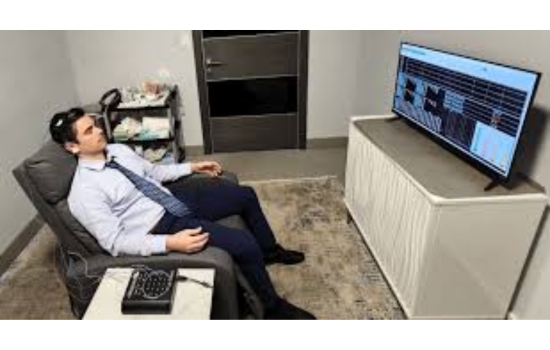
During a typical session, sensors placed on the scalp measure electrical activity from different brain regions. This information is processed by specialized software and translated into visual or auditory feedback—perhaps a game, a movie, or changing sounds. When the brain produces desired patterns, the feedback becomes more rewarding (the game progresses, the movie plays smoothly, or pleasant tones sound). Through repeated sessions, the brain learns to produce these beneficial patterns more consistently.
How Neurofeedback Specifically Enhances Empathy
Empathy-focused neurofeedback protocols typically target specific brain regions and frequencies associated with emotional attunement. Training might encourage increased alpha activity in the right hemisphere, which correlates with enhanced emotional perception. Protocols may also promote better communication between the prefrontal cortex and limbic system, improving emotional regulation while maintaining sensitivity.
Some advanced approaches use connectivity training, where feedback rewards synchronized activity between different brain regions involved in empathic processing. This trains the brain to activate empathy networks more efficiently and automatically during social interactions.
🎯 Practical Applications: From Clinical Settings to Everyday Life
While neurofeedback was initially developed for clinical applications, its potential for enhancing empathy extends far beyond treating specific disorders. Healthcare professionals, educators, parents, and anyone seeking deeper connections can benefit from this technology.
Neurofeedback for Healthcare Professionals
Physicians, nurses, therapists, and counselors regularly experience compassion fatigue—a state of emotional exhaustion that diminishes empathic capacity. Neurofeedback training helps these professionals maintain emotional availability while establishing healthy boundaries. Studies have shown that regular neurofeedback sessions can reduce burnout symptoms and restore the neural foundations of compassionate care.
One study involving emergency room staff found that after eight weeks of empathy-focused neurofeedback, participants reported significantly improved patient interactions and greater job satisfaction. Their brain scans revealed increased activity in regions associated with emotional regulation and social cognition.
Enhancing Relationships and Family Dynamics
Couples experiencing communication difficulties often struggle with fundamental empathy deficits—not necessarily a lack of caring, but an inability to accurately perceive or respond to their partner’s emotional states. Neurofeedback offers a non-confrontational approach to building the neural infrastructure for better emotional attunement.
Parents dealing with challenging child behaviors can also benefit tremendously. When a parent’s brain is trained to maintain calm, regulated states even during stressful interactions, they naturally respond more empathically to their children’s underlying needs rather than reacting to surface behaviors.
The Research Foundation: What Studies Reveal About Neurofeedback and Empathy
The scientific evidence supporting neurofeedback for empathy enhancement continues to grow, with studies employing increasingly sophisticated methodologies and measurement techniques.
A landmark 2019 study published in NeuroImage demonstrated that just ten sessions of alpha-theta neurofeedback training significantly improved scores on standardized empathy assessments. Participants showed enhanced ability to identify emotions in facial expressions and reported feeling more emotionally connected to others in their daily lives. Importantly, these improvements persisted at three-month follow-up, suggesting lasting neural changes.
Research from the Max Planck Institute found that neurofeedback training targeting the anterior insula resulted in increased activation of this region during empathy tasks. Participants also demonstrated greater consistency in empathic responses—they weren’t just more empathic on average, but more reliably empathic across different situations and emotional contexts.
Comparing Neurofeedback to Traditional Empathy Training
While compassion meditation, perspective-taking exercises, and other traditional approaches show benefits, neurofeedback offers distinct advantages. It works at the neurological level, potentially creating changes that precede and support conscious empathic efforts. Many individuals find it easier to engage with than meditation practices, particularly those who struggle with stillness or self-directed mental exercises.
Some research suggests that combining neurofeedback with traditional approaches yields the strongest results. The neurofeedback establishes favorable brain states, while conscious practices help integrate these states into everyday social behavior.
💡 Getting Started: What to Expect From Empathy-Focused Neurofeedback
If you’re considering neurofeedback training for enhanced empathy, understanding the process helps set realistic expectations and maximize benefits.
Initial Assessment and Protocol Design
Effective neurofeedback begins with comprehensive assessment. A qualified practitioner will typically conduct a quantitative EEG (qEEG) brain map, which reveals your unique neural patterns, strengths, and areas for development. They’ll also assess your specific empathy profile—where your natural abilities lie and where enhancement would be most beneficial.
Based on this information, they design a personalized training protocol. Rather than a one-size-fits-all approach, effective empathy training accounts for individual differences in brain organization and empathic style.
The Training Process
Sessions typically last 30-45 minutes and occur once or twice weekly. During training, you’ll relax while sensors monitor your brain activity. You might watch a movie that plays smoothly when your brain produces target patterns, or play a simple game that responds to your neural state.
The experience is generally pleasant and requires no conscious effort—you simply observe the feedback and allow your brain to naturally adjust. Many people find sessions relaxing, reporting that they enter a peaceful, meditative state.
Most practitioners recommend 20-40 sessions for lasting changes, though some individuals notice improvements earlier. Progress isn’t always linear; you might experience plateaus followed by sudden breakthroughs as your brain consolidates new patterns.
🏡 Home-Based Neurofeedback: Technology and Considerations
Advances in consumer technology have made home-based neurofeedback increasingly accessible. While these systems typically offer less precision than clinical setups, they provide convenient options for maintenance training or supplementing professional sessions.
Several apps and devices now offer empathy or meditation-focused neurofeedback. These systems use simplified EEG sensors—often just one or two channels—connected to smartphones or tablets. The apps provide feedback through games, visualizations, or guided experiences.
When considering home-based systems, research the company’s credibility, read user reviews, and understand the limitations. These devices work best for individuals who’ve already established a foundation through clinical neurofeedback or have clear self-awareness of their progress.
Overcoming Barriers: Accessibility, Cost, and Skepticism
Despite its promise, neurofeedback faces several barriers to widespread adoption for empathy enhancement.
Addressing the Cost Factor
Clinical neurofeedback sessions typically cost between $100-250 per session, with complete protocols running several thousand dollars. This places comprehensive training out of reach for many people. However, the landscape is changing. Group training options, sliding scale practices, and increasingly affordable home systems are expanding accessibility.
Some health insurance plans now cover neurofeedback when prescribed for specific conditions. As research linking empathy deficits to various mental health challenges grows, coverage may expand.
Navigating Scientific Skepticism
While research support grows, neurofeedback still faces skepticism from some quarters of the scientific community. Critics point to methodological limitations in some studies and the challenge of creating true placebo controls. They’re not entirely wrong—more rigorous research is needed.
However, dismissing neurofeedback entirely ignores substantial evidence of its efficacy. The key is maintaining appropriate expectations: neurofeedback isn’t magic, but a tool for facilitating neural changes that support empathic capacity. Like any intervention, results vary among individuals.
🌟 Beyond Individual Enhancement: Social and Ethical Implications
As neurofeedback for empathy moves from laboratory to application, important questions emerge about its broader implications.
Could Enhanced Empathy Transform Society?
Imagine a world where empathy training is as common as physical fitness. Would we see reduced conflict, more compassionate institutions, and greater social cohesion? While technological solutions alone won’t solve complex social problems, widespread empathy enhancement could contribute to positive cultural shifts.
Some organizations are already exploring this potential. Several corporations have implemented neurofeedback programs for leadership development, recognizing that empathic leaders create more engaged, productive teams. Schools are experimenting with programs for students with social difficulties.
Ethical Considerations and Potential Misuse
Any technology that influences brain function raises ethical questions. Could neurofeedback be misused to manipulate people’s emotional responses? What about equity—if empathy enhancement becomes a privilege of the wealthy, could it exacerbate social divisions?
There’s also the question of authenticity. If someone’s empathy is technologically enhanced, is it still genuine? Most neuroscientists would argue yes—neurofeedback doesn’t create artificial emotions but rather removes barriers to natural empathic capacity. Still, these questions deserve ongoing consideration as the technology evolves.
Integrating Neurofeedback Into a Holistic Approach to Empathy
While neurofeedback offers powerful potential, it works best as part of a comprehensive approach to developing empathy and emotional intelligence.
Combine neurofeedback with conscious practices like compassion meditation, which reinforces neural changes at the level of deliberate intention. Engage in perspective-taking exercises that challenge you to imaginatively enter different viewpoints. Read diverse literature and expose yourself to art that evokes emotional responses—these experiences build empathic imagination while your neurofeedback training strengthens the underlying neural capacity.
Seek real social connection. Technology can enhance our capabilities, but empathy ultimately develops through genuine human interaction. The most effective approach uses neurofeedback to establish favorable neural conditions, then actively exercises empathy in daily life, allowing new patterns to consolidate through practical application.
🔮 The Future of Empathy Enhancement Technology
Current neurofeedback systems represent just the beginning of what’s possible for enhancing human connection through neurotechnology.
Researchers are developing closed-loop systems that could provide neurofeedback in real time during actual social interactions. Imagine discrete sensors that detect when you’re becoming defensively closed off during a difficult conversation and provide gentle cues to shift into a more receptive state.
Advances in artificial intelligence are enabling more sophisticated analysis of brain patterns, potentially allowing systems to identify subtle empathy-related signals invisible to current technology. Machine learning algorithms might eventually customize training protocols in real time based on your brain’s unique responses.
Virtual reality combined with neurofeedback offers exciting possibilities. Experiencing challenging social situations in VR while receiving feedback about your neural responses could provide powerful practice opportunities in a safe environment.
Taking the First Step Toward Enhanced Connection
The journey toward enhanced empathy through neurofeedback begins with curiosity and willingness to explore your own neural patterns. If you’re interested in pursuing this path, start by researching qualified practitioners in your area. Look for providers certified by organizations like the Biofeedback Certification International Alliance (BCIA) who have specific experience with empathy or emotional regulation protocols.
Schedule consultations with multiple providers to find someone whose approach resonates with you. Ask about their experience, typical outcomes, and what makes their empathy-focused protocols effective. A good practitioner will conduct thorough assessment, explain their methodology clearly, and set realistic expectations.
If professional neurofeedback isn’t currently accessible, explore research-backed alternatives like compassion meditation while staying informed about developing home-based options. The field is evolving rapidly, and opportunities for empathy enhancement continue to expand.
Remember that empathy, while rooted in neurology, ultimately manifests in how we show up for each other. Neurofeedback provides tools for strengthening the neural foundations, but the real work—and reward—comes in applying enhanced capacity toward building deeper, more authentic human connections. In a world that often feels fragmented and polarized, this capacity for genuine understanding across differences may be one of our most essential resources for creating a more compassionate future. ✨
