
Digital emotion recognition is transforming how machines understand and respond to human feelings, creating more intuitive and empathetic technology experiences across industries worldwide.

🎭 The Revolutionary Landscape of Emotion Recognition Technology
Imagine a world where your computer understands not just what you say, but how you feel when you say it. This isn’t science fiction anymore—it’s the rapidly evolving reality of digital emotion recognition technology. By analyzing facial expressions, vocal tones, body language, and even physiological signals, modern systems can detect and interpret human emotions with remarkable accuracy.
The integration of emotion recognition into human-computer interaction represents one of the most significant technological advances of our era. From healthcare applications that monitor patient mental states to automotive systems that detect driver fatigue, the applications are as diverse as they are impactful. This technology bridges the gap between cold, logical computing and the nuanced, emotional nature of human communication.
Today’s emotion recognition systems leverage artificial intelligence and machine learning algorithms trained on massive datasets of human emotional expressions. These sophisticated tools can identify subtle micro-expressions lasting mere fractions of a second, detect vocal stress patterns invisible to the human ear, and even analyze text for emotional sentiment with contextual understanding.
📊 How Digital Emotion Recognition Actually Works
The mechanics behind emotion recognition technology involve multiple sophisticated processes working in harmony. At its core, the system captures data through various sensors and input devices, processes this information through complex algorithms, and outputs actionable insights about emotional states.
Multi-Modal Sensing Approaches
Modern emotion recognition systems typically employ several sensing modalities simultaneously for enhanced accuracy. Facial recognition cameras track minute muscle movements around the eyes, mouth, and forehead. Voice analysis software examines pitch variations, speaking rate, and vocal intensity. Wearable sensors monitor heart rate variability, skin conductance, and body temperature—all physiological indicators of emotional arousal.
Each modality contributes unique insights. Facial expressions reveal conscious and unconscious emotional displays. Voice analysis captures emotional nuances that might not appear visually. Physiological signals provide objective data about autonomic nervous system responses that individuals cannot easily control or mask.
The AI and Machine Learning Foundation
Artificial intelligence serves as the brain of emotion recognition systems. Deep learning neural networks, particularly convolutional neural networks (CNNs) for visual data and recurrent neural networks (RNNs) for sequential data like speech, power these systems. These algorithms learn patterns from training datasets containing thousands or millions of labeled emotional expressions.
The training process involves exposing the AI to diverse examples of emotions across different demographics, cultures, and contexts. This diversity is crucial because emotional expression varies significantly across cultures. A gesture considered friendly in one culture might signify something entirely different in another.
💼 Real-World Applications Transforming Industries
The practical applications of emotion recognition technology extend far beyond novelty features, fundamentally changing how businesses operate and how services are delivered across numerous sectors.
Healthcare and Mental Wellness Revolution
In healthcare settings, emotion recognition technology assists mental health professionals in monitoring patients with depression, anxiety, and autism spectrum disorders. These systems can detect subtle changes in emotional states that might escape human observation, enabling earlier interventions and more personalized treatment approaches.
Telemedicine platforms now incorporate emotion recognition to help doctors assess patient emotional well-being during virtual consultations. For patients with communication difficulties, these systems provide valuable insights that enhance diagnostic accuracy and treatment effectiveness.
Enhancing Customer Experience and Marketing
Retailers and service providers utilize emotion recognition to gauge customer satisfaction in real-time. Digital signage equipped with emotion detection cameras can adjust displayed content based on viewer reactions. Call centers employ voice emotion analysis to route calls to appropriate agents and flag interactions requiring supervisor attention.
Marketing research has been transformed by emotion recognition technology. Rather than relying solely on self-reported survey data, brands can now observe authentic emotional responses to advertisements, product designs, and store layouts. This objective emotional data provides insights that consumers themselves might not consciously recognize or report.
Educational Technology and Adaptive Learning
Education technology platforms integrate emotion recognition to create more responsive learning experiences. When systems detect student frustration or confusion, they can adjust difficulty levels, provide additional explanations, or recommend breaks. This emotional intelligence helps maintain engagement and reduces learning anxiety.
Virtual tutoring systems equipped with emotion recognition can replicate aspects of human tutors who naturally adjust their teaching approach based on student emotional cues. This personalization enhances learning outcomes and creates more supportive educational environments.
Automotive Safety and Driver Monitoring
Modern vehicles increasingly incorporate emotion recognition for safety purposes. Driver monitoring systems detect drowsiness, distraction, and emotional states like road rage that might impair driving ability. When concerning patterns are detected, vehicles can issue alerts, activate safety features, or even suggest rest stops.
This technology has particular relevance for commercial fleets, where monitoring driver emotional states helps prevent accidents and improves overall road safety. Some systems even adjust vehicle settings like climate control and audio to help maintain optimal driver alertness.
🔬 The Technology Stack Behind Emotion Detection
Understanding the technological components that enable emotion recognition provides insight into both the capabilities and limitations of current systems.
Computer Vision and Facial Analysis
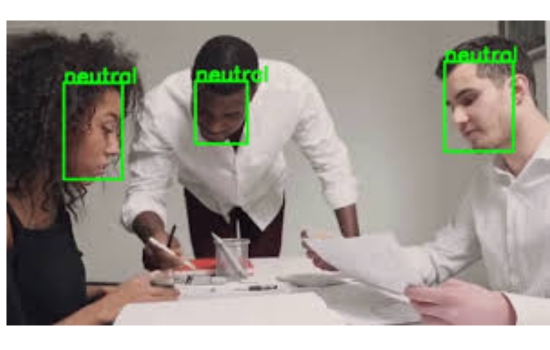
Facial emotion recognition begins with face detection algorithms that locate faces within images or video streams. Once detected, facial landmark detection identifies key points like eye corners, nose tip, and mouth edges. These landmarks serve as reference points for analyzing facial action units—specific muscle movements that combine to create emotional expressions.
The Facial Action Coding System (FACS), developed by psychologists Paul Ekman and Wallace Friesen, provides a scientific framework for categorizing facial movements. Modern AI systems trained on FACS data can recognize the six basic emotions—happiness, sadness, anger, fear, surprise, and disgust—plus more complex emotional states.
Voice and Speech Analysis Technologies
Vocal emotion recognition analyzes acoustic features including pitch (fundamental frequency), intensity (loudness), speech rate, and voice quality characteristics like jitter and shimmer. These parameters change predictably with different emotional states. Anger typically increases pitch and intensity, while sadness often lowers both.
Advanced systems also perform linguistic analysis, examining word choice, sentence structure, and semantic content. Natural language processing algorithms detect emotional keywords and assess overall sentiment. Combined acoustic and linguistic analysis provides more accurate emotion detection than either approach alone.
Physiological Signal Processing
Wearable sensors capture physiological signals that correlate with emotional arousal. Heart rate variability (HRV) measures the variation in time between heartbeats—reduced HRV often indicates stress or negative emotions. Electrodermal activity (EDA) or galvanic skin response measures changes in skin conductance caused by sweat gland activity, increasing with emotional arousal.
Other signals include respiratory rate, body temperature, and even electroencephalography (EEG) for brain activity monitoring. Processing these signals requires sophisticated filtering to remove noise and artifacts while extracting meaningful emotional indicators.
🎯 Overcoming Challenges and Addressing Concerns
Despite remarkable progress, emotion recognition technology faces significant challenges that researchers and developers continue to address.
Cultural Variations in Emotional Expression
Emotional expressions aren’t universal. Cultural display rules govern how and when people express emotions, and these rules vary significantly across cultures. Some cultures encourage open emotional expression while others value emotional restraint. Systems trained predominantly on Western facial expressions may misinterpret expressions from other cultural contexts.
Addressing this challenge requires training datasets that represent global diversity. Researchers are actively collecting emotionally labeled data from diverse cultural groups to create more culturally aware emotion recognition systems.
Privacy and Ethical Considerations
Emotion recognition technology raises substantial privacy concerns. The ability to detect someone’s emotional state without their conscious awareness feels invasive to many people. Questions arise about consent, data storage, and potential misuse of emotional information.
Regulatory frameworks like GDPR in Europe classify biometric data, including emotional information, as sensitive personal data requiring special protections. Organizations implementing emotion recognition must establish clear policies about data collection, usage, retention, and subject rights.
Accuracy and Reliability Issues
No emotion recognition system achieves perfect accuracy. False positives and false negatives occur, sometimes with serious consequences. A driver monitoring system might incorrectly identify alertness as drowsiness, or a mental health monitoring tool might miss signs of deteriorating emotional well-being.
Environmental factors affect accuracy. Poor lighting conditions hamper facial recognition. Background noise interferes with voice analysis. Individual differences in baseline physiological signals complicate interpretation. Continuous improvement through better algorithms and larger, more diverse training datasets gradually enhances reliability.
🚀 The Future of Emotionally Intelligent Computing
The trajectory of emotion recognition technology points toward increasingly sophisticated and seamlessly integrated systems that enhance virtually every aspect of human-computer interaction.
Multimodal Integration and Context Awareness
Future systems will integrate multiple sensing modalities with contextual information for superior accuracy. Rather than analyzing facial expressions in isolation, systems will consider voice patterns, physiological signals, textual communication, and situational context simultaneously. A frown might indicate sadness in one context but concentration in another—contextual awareness enables more accurate interpretation.
Environmental sensors, calendar information, location data, and historical patterns will provide additional context. Machine learning systems will recognize that the same physiological patterns might indicate excitement before a presentation or anxiety before a medical procedure.
Personalized Emotional Baselines
Generic emotion recognition systems apply population-level models to individuals, but people vary in how they express emotions. Future systems will establish personalized emotional baselines through continuous learning, understanding how each individual uniquely expresses different emotional states.
This personalization will dramatically improve accuracy and enable detection of subtle emotional shifts that might be invisible to generic models. Mental health applications particularly benefit from this approach, detecting departures from individual baseline patterns that might signal emerging issues.
Emotionally Responsive AI Assistants
Virtual assistants and chatbots will evolve beyond understanding words to understanding emotions. These emotionally intelligent AI systems will adjust their communication style based on user emotional states. When detecting frustration, they might offer more detailed explanations or transfer to human support. When sensing positive emotions, they might engage more conversationally.
This emotional intelligence will make technology feel less robotic and more human-like, reducing user frustration and improving satisfaction. The goal isn’t to replace human interaction but to make technology more accommodating and responsive to human emotional needs.
🌟 Implementing Emotion Recognition: Practical Considerations
Organizations considering emotion recognition implementation should carefully evaluate several factors to ensure successful deployment.
Defining Clear Use Cases and Objectives
Successful implementation begins with clearly defined objectives. What specific problems will emotion recognition solve? How will success be measured? Vague goals like “improving customer experience” should be refined into specific, measurable objectives like “reducing call center escalations by detecting customer frustration early.”
Use case definition should include consideration of alternative approaches. Sometimes simpler solutions might achieve similar results without the complexity and concerns associated with emotion recognition. The technology should serve genuine needs, not be implemented simply because it’s possible.
Building Trust Through Transparency
Transparency builds trust when implementing emotion recognition systems. Users should understand what data is collected, how it’s analyzed, what decisions are influenced by emotional analysis, and what rights they have regarding their emotional data.
Clear communication about safeguards protecting emotional privacy reassures users. Offering opt-out options where feasible demonstrates respect for individual preferences. Some organizations appoint emotional data protection officers responsible for ensuring ethical implementation.
Ensuring Human Oversight and Accountability
Emotion recognition systems should augment rather than replace human judgment, especially in high-stakes decisions. Human oversight ensures that system errors or limitations don’t lead to inappropriate outcomes. Clear accountability structures define who’s responsible when emotion recognition systems malfunction or produce unintended consequences.
Regular audits assess system accuracy across demographic groups, identifying and correcting biases. Performance metrics should include fairness measures ensuring the system performs equitably for all users regardless of age, gender, ethnicity, or other characteristics.
🎓 The Science Behind Emotional Intelligence
Digital emotion recognition builds upon decades of psychological research into human emotions and their expression.
Paul Ekman’s groundbreaking work established that certain facial expressions of emotion are universal across cultures, providing a foundation for facial emotion recognition. Lisa Feldman Barrett’s constructed emotion theory suggests emotions are not universal but contextual constructions, highlighting the importance of context in emotion interpretation.
The circumplex model of affect, developed by James Russell, represents emotions along two dimensions: valence (positive-negative) and arousal (high-low). This model informs how emotion recognition systems categorize detected emotional states. Rather than forcing emotions into discrete categories, dimensional models represent the continuous nature of emotional experience.
Understanding these theoretical foundations helps developers create more sophisticated systems that acknowledge emotional complexity. Emotions aren’t simple on-off switches but nuanced states influenced by context, personality, culture, and countless other factors.
💡 Maximizing Value While Minimizing Risks
Organizations successfully deploying emotion recognition technology balance innovation with responsibility. They achieve valuable outcomes while protecting individuals and maintaining ethical standards.
Regular stakeholder engagement ensures diverse perspectives inform implementation decisions. Privacy advocates, ethicists, users, and technical experts all contribute valuable insights. This inclusive approach identifies potential issues before they become problems and builds broader support for the technology.
Continuous monitoring and improvement cycles ensure systems remain accurate, fair, and beneficial. As technology evolves and social norms shift, emotion recognition implementations must adapt. What seems acceptable today might become problematic tomorrow—ongoing vigilance maintains alignment with evolving expectations.
The transformative potential of digital emotion recognition in human-computer interaction is undeniable. By enabling machines to understand and respond appropriately to human emotions, this technology creates more natural, intuitive, and ultimately more human-centered computing experiences. Success requires technical excellence, ethical implementation, and genuine commitment to enhancing rather than exploiting human emotional life. As the technology matures, emotionally intelligent systems will become increasingly integrated into daily life, making our interactions with technology more empathetic, responsive, and fundamentally more aligned with human needs and preferences. 🌐
