
In a world overflowing with notifications, emails, and endless digital distractions, maintaining focus has become our most valuable—and most threatened—productivity asset.

Every ping, buzz, and pop-up notification represents a potential derailment of your concentration. Research shows that it takes an average of 23 minutes to fully regain focus after an interruption. When you consider how many times you’re distracted throughout a typical workday, the accumulated lost time becomes staggering. This isn’t just about productivity—it’s about the quality of your work, your stress levels, and ultimately, your success.
Distraction management systems have emerged as essential tools in the modern professional’s arsenal. These aren’t just about blocking websites or silencing your phone; they represent a comprehensive approach to designing your environment, habits, and workflows to protect your most precious cognitive resource: sustained attention.
🧠 Understanding the Neuroscience Behind Distraction
Before we can effectively manage distractions, we need to understand why our brains are so susceptible to them in the first place. Our neural wiring evolved in an environment vastly different from today’s digital landscape, and this mismatch creates vulnerabilities that modern technology exploits.
The human brain is hardwired to respond to novelty. In our ancestral environment, a sudden movement or unexpected sound could signal danger or opportunity—both critical for survival. This same mechanism that once protected us from predators now makes us compulsively check our phones every few minutes.
Dopamine, the neurotransmitter associated with reward-seeking behavior, plays a central role in distraction. Every notification, message, or new piece of information triggers a small dopamine release, creating a feedback loop that conditions us to seek more stimulation. This isn’t a character flaw—it’s neurochemistry working exactly as designed, just in an environment it wasn’t designed for.
The True Cost of Context Switching
When you switch from one task to another, your brain doesn’t instantly shift gears. There’s a cognitive residue that remains from the previous task, interfering with your ability to fully engage with the new one. This “attention residue” significantly impairs performance, yet most people switch tasks dozens or even hundreds of times per day.
Studies from the University of California, Irvine, found that workers are interrupted or switch tasks every three minutes on average. The fragmentation of attention doesn’t just slow you down—it fundamentally changes the type and quality of work you can produce. Deep, creative, strategic thinking requires sustained attention that these constant interruptions make nearly impossible.
🎯 Building Your Personal Distraction Management System
An effective distraction management system isn’t about willpower or discipline alone. It’s about designing systems that make focused work the path of least resistance while adding friction to distracting behaviors.
Layer One: Environmental Design
Your physical and digital environment profoundly influences your ability to maintain focus. Start by conducting a distraction audit—spend one full day tracking every interruption and its source. You’ll likely discover patterns you weren’t consciously aware of.
For your physical workspace, consider these elements:
- Position your desk to minimize visual distractions from high-traffic areas
- Use noise-canceling headphones or work in quieter spaces during focus blocks
- Remove unnecessary devices from your workspace—if you don’t need your phone for a task, place it in another room
- Create visual cues that signal “deep work mode” to colleagues and family members
- Optimize lighting and temperature for alertness and comfort
Your digital environment requires equal attention. Desktop clutter, browser tabs, and notification settings all impact your cognitive load and susceptibility to distraction.
Layer Two: Technology Tools and Applications
While technology creates many of our distraction problems, it can also provide powerful solutions. Distraction management apps have evolved significantly, offering sophisticated features that adapt to your work patterns and protect your focus time.
Website and app blockers create essential boundaries during focus periods. These tools prevent access to predetermined distracting sites and applications during specified times. The key is setting them up during a moment of clarity—when you’re committed to focused work—so your future self doesn’t have the option to easily disable them.
Focus timer applications leverage the Pomodoro Technique and other time-boxing methods to structure your work sessions. These apps help you commit to specific periods of uninterrupted work, followed by intentional breaks. The structure reduces decision fatigue and creates a rhythm that supports sustained concentration.
Notification management tools give you granular control over which alerts reach you and when. Rather than the all-or-nothing approach of “Do Not Disturb,” these applications let you create sophisticated rules that ensure truly important notifications get through while filtering the noise.
Layer Three: Behavioral Protocols
Technology and environment provide the foundation, but sustainable focus requires establishing protocols—predetermined rules for how you’ll handle common distraction scenarios.
Create a “startup sequence” for focus sessions. This ritual might include closing all unnecessary applications, opening only the files needed for your current task, setting a timer, and taking three deep breaths. The consistency of this sequence trains your brain to shift into focus mode.
Establish clear boundaries around communication. This might mean checking email only at scheduled times rather than keeping your inbox open continuously. It could involve setting expectations with colleagues about response times or using status indicators that show when you’re in deep work mode.
Implement the “two-minute rule” for potential distractions: if something will take less than two minutes, you can address it immediately. If it will take longer, add it to a capture system to handle during a designated time. This prevents both the interruption of lengthy detours and the cognitive load of trying to remember tasks for later.
⚡ Advanced Strategies for Protecting Deep Work
Once you’ve established the foundations, these advanced strategies can take your focus capacity to the next level.
Time Blocking and Calendar Architecture
Your calendar shouldn’t just track meetings—it should be a comprehensive plan for your attention. Schedule blocks of uninterrupted focus time with the same respect you’d give an important meeting. Protect this time zealously, declining requests that conflict with these blocks unless truly urgent.
Structure your day around your natural energy rhythms. Most people have a peak cognitive performance window in the late morning, a post-lunch dip, and a secondary peak in the late afternoon. Schedule your most demanding deep work during your peak windows and save routine tasks for lower-energy periods.
The Power of Batching
Task batching reduces the cognitive switching costs by grouping similar activities together. Rather than checking email sporadically throughout the day, batch all email processing into two or three designated periods. Apply the same principle to phone calls, administrative tasks, and creative work.
This approach creates longer uninterrupted blocks for deep work while ensuring responsive communication during designated windows. The key is communicating your system to stakeholders so they understand when to expect responses.
Creating Implementation Intentions
Implementation intentions are “if-then” plans that precommit you to specific responses to distraction triggers. For example: “If I feel the urge to check social media during work time, then I’ll write down what I’m feeling and continue with my task.” Or: “If a colleague interrupts during a focus block, then I’ll ask if it’s urgent and if not, schedule a time to discuss it later.”
These pre-planned responses remove the need for in-the-moment decision-making, which is precisely when your willpower is weakest. Research shows that implementation intentions significantly increase follow-through on intended behaviors.
📊 Measuring and Optimizing Your Focus
What gets measured gets managed. Tracking your focus patterns provides insights that enable continuous improvement of your distraction management system.
Metrics That Matter
Consider tracking these key indicators of focus quality:
- Number of focus blocks completed per day (uninterrupted 60-90 minute work sessions)
- Total time spent in deep work versus shallow work or distractions
- Number of context switches or interruptions during work blocks
- Subjective focus quality ratings for each work session
- Correlation between focus time and meaningful output or progress on important goals
Time-tracking applications designed for focus work can automate much of this data collection, providing detailed reports on how you’re actually spending your time versus how you think you’re spending it.
The Weekly Review Process
Dedicate 30 minutes each week to review your focus metrics and adjust your system. Look for patterns—which days or times showed the best focus? What circumstances correlated with the most distractions? What strategies worked and what fell short?
This regular reflection transforms raw data into actionable insights. You might discover that afternoon meetings destroy your ability to focus for the rest of the day, or that working from a coffee shop twice a week significantly boosts your productivity. These insights allow you to optimize your system continuously.
🚀 Scaling Your System for Long-Term Success
The most sophisticated distraction management system fails if you can’t maintain it consistently. Building sustainable habits around focus requires understanding behavior change principles.
Start Small and Stack Habits
Don’t try to implement every strategy simultaneously. Begin with one or two interventions, master them until they become automatic, then add the next layer. This gradual approach prevents the overwhelm that causes people to abandon new systems.
Use habit stacking to anchor new focus practices to existing routines. For example: “After I pour my morning coffee, I’ll review my three most important tasks for deep work.” Or: “When I sit down at my desk, I’ll put my phone in the drawer and set a focus timer before opening any applications.”
Building Recovery Into Your System
Sustainable focus isn’t about eliminating all breaks or working in a state of constant intensity. The most productive people strategically alternate between focused work and genuine recovery periods.
Your breaks should provide true cognitive restoration, not just different stimulation. Instead of checking social media during breaks, consider activities that genuinely refresh: a short walk, stretching, meditation, or even staring out a window. These activities help your brain consolidate learning and prepare for the next focus session.
💡 Overcoming Common Obstacles and Resistance
Even with the best systems, you’ll encounter challenges and resistance—both internal and external. Anticipating these obstacles helps you navigate them successfully.
Dealing with Workplace Culture Barriers
Many organizations have cultures that expect constant availability and immediate responses. Changing your work patterns may require setting new expectations with colleagues and managers.
Frame your distraction management practices in terms of value delivery rather than unavailability. Instead of saying “I won’t be checking Slack,” say “I’m blocking focus time each morning to make more progress on the X project.” When people see that your new system produces better results, they typically become supportive.
Consider sharing your insights with colleagues and even advocating for team-wide focus practices. Many people struggle with the same issues but feel trapped by organizational norms. Being the catalyst for culture change can benefit everyone.
Managing FOMO and the Urge to Stay Connected
Fear of missing out drives much distraction behavior. What if something important happens while you’re disconnected? What if someone needs you urgently?
Reality check these fears against actual experience. Track how often something truly urgent happens that couldn’t wait 90 minutes. You’ll likely find that genuine emergencies are rare, and most “urgent” matters are simply habits of reactivity rather than true priorities.
Establish clear escalation paths for true emergencies. Let key stakeholders know that if something genuinely can’t wait, they can reach you through a specific channel (a phone call rather than email, for example). This safety valve addresses legitimate concerns while protecting the vast majority of your time for focused work.
🎓 The Competitive Advantage of Superior Focus
In an economy increasingly based on knowledge work and creative problem-solving, the ability to focus deeply is becoming a crucial competitive differentiator. As Cal Newport argues in “Deep Work,” the capacity for sustained concentration is simultaneously becoming more valuable and more rare.
While your colleagues and competitors struggle with fractured attention and constant context-switching, your investment in distraction management creates compound advantages. You produce higher quality work in less time. You develop expertise faster through sustained practice. You experience less stress and greater satisfaction because you’re making meaningful progress on what matters most.
The organizations and individuals who master distraction management won’t just be more productive—they’ll be doing fundamentally different types of work. The strategic thinking, creative breakthroughs, and complex problem-solving that define exceptional performance all require the sustained attention that distraction management systems protect.
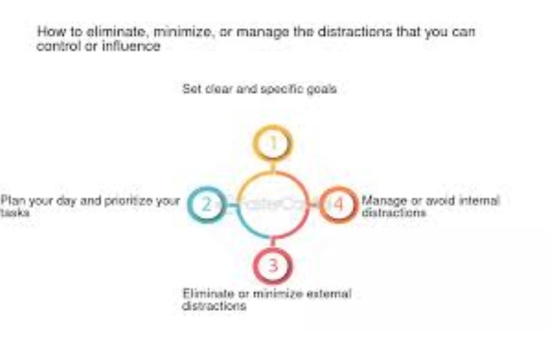
🌟 Creating Your Unique Focus Framework
There’s no one-size-fits-all solution to distraction management. The most effective system is the one that fits your specific context, preferences, and challenges. Use the principles and strategies outlined here as a starting point, then customize based on what you learn about your own patterns.
Experiment deliberately. Try different tools, techniques, and schedules for defined periods, then evaluate results objectively. What works brilliantly for one person might feel constraining or ineffective for another. The goal isn’t to follow someone else’s system perfectly—it’s to build your own framework that sustainably protects your focus and enables your best work.
Remember that your system will need to evolve as your circumstances change. A distraction management approach that works during a project-intensive period might need adjustment during a more collaborative phase. Stay flexible and continue refining based on current needs and results.
The modern world presents unprecedented challenges to sustained attention, but it also offers unprecedented tools and knowledge for managing those challenges. By implementing a comprehensive distraction management system, you’re not just protecting your productivity—you’re reclaiming your cognitive sovereignty and creating the conditions for your most meaningful work. The ability to stay focused when others cannot isn’t just a productivity hack; it’s a superpower for the 21st century. ⚡
