
Our perception of time profoundly shapes how we think, decide, and control our cognitive processes in ways most people never consciously recognize.

🧠 The Hidden Architecture of Temporal Cognition
Time perception isn’t merely about reading clocks or remembering appointments. It represents a fundamental cognitive framework that influences every aspect of how we process information, make decisions, and exercise mental control. Neuroscience research reveals that our internal clock mechanisms interact continuously with executive functions, creating a complex relationship between temporal awareness and cognitive performance.
The human brain contains multiple timing systems operating simultaneously. These systems range from millisecond-level processes managing speech perception to circadian rhythms governing our sleep-wake cycles. Each timing mechanism contributes uniquely to cognitive control, affecting attention span, working memory capacity, and decision-making quality.
Understanding this connection between time perception and cognitive control opens pathways to enhanced mental performance. When we recognize how temporal distortions affect our thinking, we gain powerful tools for optimizing productivity, creativity, and overall cognitive function.
The Neuroscience Behind Temporal Processing
The brain’s temporal processing capabilities emerge from distributed neural networks rather than a single “time center.” The cerebellum, basal ganglia, prefrontal cortex, and parietal regions all contribute to our time perception abilities. Each area specializes in different temporal ranges and types of timing tasks.
The prefrontal cortex plays a particularly crucial role in bridging time perception and cognitive control. This brain region manages executive functions while simultaneously tracking temporal information necessary for planning and sequencing behaviors. When prefrontal circuits experience disruption, both timing abilities and cognitive control suffer simultaneously.
Research using neuroimaging techniques demonstrates that temporal processing and cognitive control share overlapping neural substrates. This anatomical convergence explains why time pressure affects decision quality, and why cognitive load distorts time perception. The relationship flows bidirectionally, creating feedback loops that can either enhance or impair mental performance.
Dopamine: The Neurochemical Clock Regulator
Dopamine neurotransmission significantly influences both time perception and cognitive control. Studies show that dopamine levels in the striatum affect internal clock speed, with higher concentrations creating subjective time acceleration. This neurochemical system links motivation, timing, and executive function into an integrated cognitive control mechanism.
Conditions affecting dopamine systems, such as Parkinson’s disease and ADHD, typically produce both timing deficits and cognitive control impairments. This pattern reinforces the fundamental connection between temporal processing and executive functions at the neurochemical level.
How Time Perception Shapes Decision-Making Quality 🎯
Decision-making quality depends heavily on accurate temporal processing. When we misjudge time intervals, we make poor choices about resource allocation, risk assessment, and goal prioritization. The temporal discounting phenomenon illustrates this clearly: people consistently overvalue immediate rewards relative to delayed benefits, even when waiting produces objectively better outcomes.
This temporal bias affects decisions across all life domains. Financial planning suffers when future rewards feel psychologically distant. Health behaviors deteriorate when long-term consequences seem irrelevant. Relationship quality declines when partners cannot accurately estimate time investments and emotional returns.
Cognitive control helps override these temporal biases, but only when functioning optimally. Stress, fatigue, and cognitive load all impair both time perception accuracy and executive control capacity. This dual impairment creates vulnerability to impulsive choices and short-term thinking patterns.
The Planning Fallacy and Temporal Miscalibration
The planning fallacy represents a ubiquitous cognitive error where people underestimate task completion times despite extensive past experience with similar projects. This systematic temporal miscalibration reflects fundamental limitations in how cognitive control systems project into future timeframes.
Several cognitive mechanisms contribute to planning fallacy persistence. People focus disproportionately on idealized task sequences while neglecting potential obstacles. They fail to adequately reference past timing data when making future predictions. And they experience optimistic bias that distorts temporal judgments toward unrealistic brevity.
Improving temporal calibration requires deliberate cognitive strategies. Breaking projects into smaller components improves estimation accuracy. Explicitly reviewing past timing data counteracts optimistic bias. And incorporating buffer time for unexpected delays produces more realistic schedules.
Attention Control Through Temporal Manipulation
Attention represents perhaps the most time-dependent cognitive function. Our ability to sustain focus, shift between tasks, and filter distractions all depend critically on temporal processing capabilities. The rhythm and timing of attentional deployment directly affects information processing efficiency.
Research on attentional blink demonstrates temporal limitations in conscious awareness. When two targets appear in rapid succession, the second often goes undetected, revealing fundamental timing constraints in attentional mechanisms. This phenomenon shows how temporal processing bottlenecks limit cognitive control capacity.
Conversely, manipulating temporal aspects of attention deployment can enhance cognitive performance. Rhythmic cueing improves detection accuracy. Strategic timing of breaks optimizes sustained attention. And aligning cognitively demanding tasks with circadian peaks maximizes processing efficiency.
Flow States and Temporal Distortion
Flow states represent optimal cognitive performance characterized by complete absorption in challenging tasks. One hallmark feature involves dramatic temporal distortion, with hours feeling like minutes. This altered time perception reflects profound changes in cognitive control dynamics during peak performance states.
During flow, the brain exhibits reduced activity in self-monitoring networks while increasing activation in task-relevant circuits. This redistribution of neural resources eliminates temporal self-awareness, creating the subjective sense that time has disappeared. Paradoxically, this temporal disconnection enhances rather than impairs cognitive control.
Understanding flow’s temporal characteristics provides strategies for cultivating these optimal states. Minimizing external temporal markers like clocks reduces intrusive time awareness. Selecting appropriately challenging tasks maintains engagement without overwhelming cognitive resources. And creating uninterrupted time blocks allows natural flow emergence.
Working Memory and Temporal Dynamics 💡
Working memory capacity depends fundamentally on temporal processing abilities. Information maintenance in working memory requires continuous refreshing processes that operate on specific time scales. The duration and timing of these refresh cycles directly impacts how much information we can actively maintain and manipulate.
Studies measuring working memory span demonstrate clear temporal constraints. Most people can maintain approximately four to seven items for intervals of several seconds before requiring rehearsal. These temporal limits reflect fundamental properties of the neural circuits implementing working memory functions.
The temporal dynamics of working memory explain many cognitive control phenomena. Interference increases when similar information occupies working memory simultaneously. Forgetting accelerates when refresh processes experience disruption. And complex reasoning suffers when working memory must juggle temporally extended information sequences.
Temporal Chunking for Enhanced Memory
Temporal chunking represents a powerful strategy for overcoming working memory limitations. By organizing information into rhythmic or sequential patterns, we can dramatically expand effective capacity. Phone numbers, musical sequences, and procedural skills all benefit from temporal chunking strategies.
This technique works by aligning information structure with the brain’s natural temporal processing rhythms. Rather than treating each element independently, chunking creates hierarchical temporal patterns that distribute memory load more efficiently across multiple brain systems.
Stress, Time Pressure, and Cognitive Performance
Time pressure represents one of the most potent stressors affecting cognitive control. When deadlines loom, multiple cognitive systems experience simultaneous disruption. Time perception accelerates, creating the subjective sense that time is “running out.” Simultaneously, working memory capacity decreases, attentional control deteriorates, and decision-making becomes more impulsive.
The stress response evolved to facilitate rapid action in emergencies, not complex cognitive problem-solving. Under time pressure, the brain shifts toward fast, automatic processing modes at the expense of deliberate, controlled thinking. This shift helps when facing physical threats but impairs performance on tasks requiring careful analysis and planning.
Individual differences in stress response significantly affect how time pressure impacts cognitive control. Some people maintain performance or even show enhancement under moderate time constraints. Others experience rapid deterioration, particularly on tasks requiring sustained attention and complex reasoning.
Building Temporal Stress Resilience
Developing resilience to time pressure requires systematic practice under controlled conditions. Gradually increasing temporal demands while maintaining task complexity builds adaptive capacity. This training approach helps recalibrate stress responses so moderate time pressure facilitates rather than impairs performance.
Cognitive reappraisal techniques also reduce temporal stress effects. Reframing time pressure as an energizing challenge rather than a threat changes physiological stress patterns. This mental reframing preserves cognitive control resources that would otherwise be consumed by anxiety and worry.
Practical Applications for Cognitive Optimization ⚡
Understanding the time perception-cognitive control connection enables practical interventions for enhanced mental performance. These applications span personal productivity, educational settings, therapeutic contexts, and professional environments.
Time-blocking strategies leverage temporal structure to enhance focus and reduce cognitive load. By dedicating specific time periods to particular task categories, we minimize attentional switching costs and optimize cognitive resource allocation. This approach works particularly well when block durations align with natural attention span rhythms.
Temporal landmarks like new weeks, months, or years create psychological fresh starts that enhance goal pursuit and self-control. These temporal markers help segment time into meaningful units that facilitate planning and progress monitoring. Strategically using temporal landmarks can boost motivation and cognitive control effectiveness.
Meditation and Temporal Awareness Training
Mindfulness meditation practices directly train temporal awareness and cognitive control simultaneously. By maintaining present-moment focus despite mind-wandering tendencies, meditators develop enhanced executive function alongside more accurate time perception.
Research documents substantial cognitive benefits from regular meditation practice. Attentional control improves, working memory capacity increases, and temporal estimation becomes more accurate. These changes reflect neuroplastic adaptations in the brain regions supporting both timing and executive functions.
Apps like Calm provide structured meditation programs that can help develop these temporal awareness skills systematically. Regular practice creates lasting changes in cognitive control capabilities that transfer to daily life activities.
Chronotype and Cognitive Performance Timing
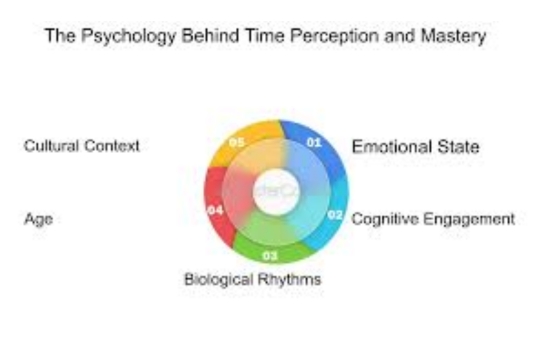
Individual chronotypes—whether you’re naturally a morning person or night owl—significantly influence when cognitive control functions optimally. These preferences reflect underlying differences in circadian rhythm timing that affect multiple physiological and psychological processes.
Cognitive performance varies substantially across the day according to chronotype. Morning types show peak executive function, working memory, and attentional control during early hours. Evening types reach optimal cognitive performance later, often showing significant impairment if forced to engage demanding tasks early morning.
Honoring chronotype preferences whenever possible optimizes cognitive control effectiveness. Scheduling complex, demanding tasks during personal peak periods maximizes success probability. Conversely, attempting difficult cognitive work during suboptimal circadian phases invites errors, inefficiency, and frustration.
Circadian Rhythm Alignment Strategies
When schedule flexibility is limited, evidence-based strategies can help align circadian rhythms with external demands. Light exposure timing represents the most powerful circadian synchronization tool. Bright light exposure during desired wake periods and darkness during intended sleep times gradually shifts internal timing.
Meal timing also influences circadian rhythms and subsequent cognitive performance. Eating during desired active periods and fasting during intended rest phases reinforces appropriate circadian alignment. This dietary approach can accelerate adjustment to new schedules.
Future Frontiers in Temporal Cognition Research 🔬
Emerging research continues revealing new dimensions of how time perception impacts cognitive control. Virtual reality technologies enable unprecedented manipulation of temporal experience, allowing researchers to study cognitive effects of time dilation and compression.
Brain stimulation techniques like transcranial magnetic stimulation and transcranial direct current stimulation show promise for temporarily enhancing or modifying temporal processing. These interventions might eventually provide therapeutic options for conditions involving temporal processing deficits.
Artificial intelligence and machine learning approaches are identifying subtle patterns in how temporal information processing relates to cognitive control across diverse populations and contexts. These computational methods may reveal optimization strategies invisible to traditional research approaches.
Integrating Temporal Awareness Into Daily Life
Mastering the relationship between time perception and cognitive control requires moving beyond intellectual understanding to practical implementation. Small, consistent adjustments in how we structure time and direct attention accumulate into substantial cognitive benefits.
Start by tracking your subjective time experience throughout typical days. Notice when time seems to fly versus drag. Identify activities that create flow states versus those that feel tedious. Recognize patterns in how stress and fatigue distort temporal perception.
Experiment with temporal structure modifications based on these observations. Adjust task scheduling to align with natural energy rhythms. Build in temporal buffers around demanding activities. Create environmental conditions that support desired temporal experiences.
The mind’s temporal architecture profoundly shapes every aspect of cognitive function. By understanding and skillfully working with these temporal dimensions, we can dramatically enhance mental performance, decision quality, and overall cognitive control. Time perception isn’t just about measuring duration—it’s about mastering the fundamental rhythm of conscious experience itself.
