
The future of human cognition is no longer confined to science fiction. Neural implants are emerging as revolutionary tools that promise to unlock unprecedented levels of mental performance and capability.

🧠 The Dawn of Cognitive Enhancement Technology
Neural implants represent one of the most fascinating intersections of neuroscience, engineering, and human ambition. These sophisticated devices, designed to interface directly with our brain’s neural networks, are pushing the boundaries of what we once thought possible for human cognitive abilities. From restoring lost functions to enhancing existing capabilities, the landscape of neural technology is evolving at an extraordinary pace.
The concept of augmenting human cognition isn’t entirely new. Humans have been using external tools to extend their mental capabilities for millennia—from writing systems to calculators and smartphones. However, neural implants represent a fundamental shift: instead of external aids, we’re talking about direct integration with the biological substrate of thought itself.
Today’s neural implant technology has moved far beyond experimental stages in many applications. Medical-grade devices are already helping patients with Parkinson’s disease, epilepsy, and hearing loss. But the next frontier—cognitive enhancement for healthy individuals—is where the real transformative potential lies, alongside significant ethical considerations.
Understanding How Neural Implants Work
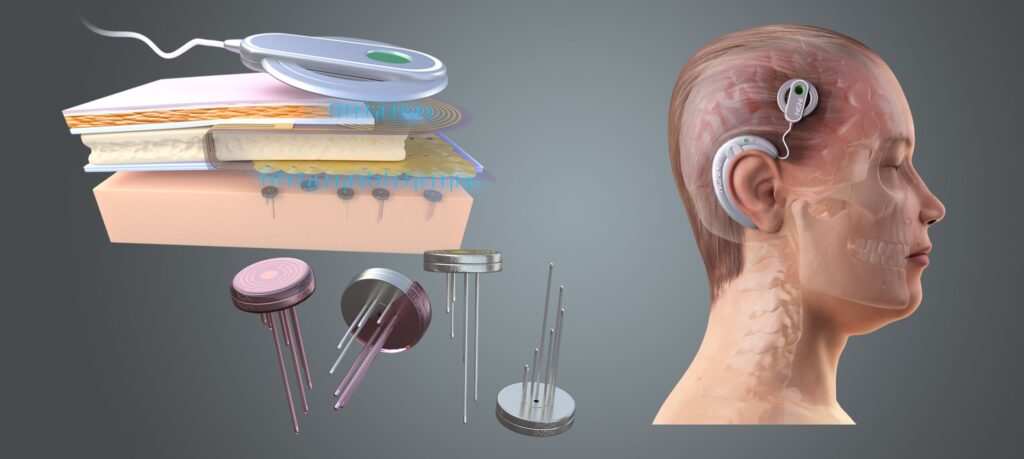
At their core, neural implants are sophisticated electronic devices that create a direct communication pathway between the brain and external technology. These devices work by detecting electrical signals generated by neurons and either interpreting these signals or stimulating specific neural pathways to produce desired outcomes.
The brain communicates through electrical impulses traveling between neurons across synapses. Neural implants tap into this communication system using tiny electrodes that can both read and write neural signals. Modern implants range from simple single-electrode devices to complex arrays containing thousands of recording and stimulation sites.
The Technology Behind Brain-Computer Interfaces
Brain-computer interfaces (BCIs) form the foundation of cognitive enhancement neural implants. These systems typically consist of several key components working in harmony:
- Electrode arrays that make contact with neural tissue
- Signal processing units that filter and interpret neural activity
- Wireless transmission systems for external communication
- Power sources, often using biocompatible batteries or wireless charging
- Stimulation circuits that can modulate neural activity
The precision required for these devices is extraordinary. Neurons operate at millisecond timescales, and the electrical signals they generate are measured in microvolts. Successfully interfacing with this delicate biological machinery requires materials that won’t trigger immune responses, electronics that can operate reliably in the body’s warm, wet environment, and algorithms sophisticated enough to decode the brain’s complex patterns.
🚀 Current Applications Paving the Way
Before we explore enhancement possibilities, it’s crucial to understand the medical applications that are establishing the foundation and safety standards for neural implant technology. These therapeutic uses are providing invaluable data and experience that will inform future enhancement applications.
Medical Breakthroughs Already in Practice
Deep brain stimulation (DBS) has been successfully treating movement disorders like Parkinson’s disease for over two decades. These implants deliver carefully calibrated electrical pulses to specific brain regions, dramatically reducing tremors and improving quality of life for thousands of patients worldwide.
Cochlear implants have restored hearing to over half a million people, directly stimulating the auditory nerve to bypass damaged parts of the ear. Retinal implants are beginning to provide visual perception to some blind individuals by stimulating the optic nerve or visual cortex directly.
For epilepsy patients, responsive neurostimulation systems monitor brain activity continuously and deliver targeted stimulation to prevent seizures before they occur. These systems represent a crucial step toward more sophisticated cognitive monitoring and intervention capabilities.
The Promise of Cognitive Enhancement
Moving beyond therapeutic applications, neural implants hold remarkable potential for enhancing normal cognitive function. This is where the technology becomes truly revolutionary—and controversial. The possibility of improving memory, accelerating learning, enhancing focus, or even expanding sensory perception represents a paradigm shift in human evolution.
Memory Amplification and Recall
One of the most promising areas for cognitive enhancement involves memory systems. Research has shown that targeted electrical stimulation of the hippocampus—the brain’s memory center—can enhance memory formation and recall. Studies conducted on epilepsy patients with implanted electrodes have demonstrated that precisely timed stimulation can improve memory performance by up to 30%.
Imagine being able to remember conversations verbatim, never forgetting where you placed your keys, or recalling complex information effortlessly during important presentations. Memory-enhancing neural implants could transform education, professional performance, and daily life in profound ways.
Accelerated Learning and Skill Acquisition
Neural implants could potentially accelerate the learning process by optimizing the brain states associated with information acquisition and consolidation. By detecting when the brain is in optimal learning modes and enhancing these states through targeted stimulation, implants might dramatically reduce the time required to master new skills.
Some researchers are exploring whether neural implants could facilitate direct information transfer—though this remains highly speculative. More realistically, implants might help by optimizing attention, reducing cognitive fatigue, and strengthening the neural pathways involved in skill development.
⚡ Enhanced Focus and Mental Performance
In our distraction-filled world, the ability to maintain sustained attention and peak mental performance is increasingly valuable. Neural implants could potentially modulate the brain’s attention networks, helping users achieve and maintain states of deep focus on demand.
The prefrontal cortex plays a crucial role in executive function, decision-making, and attention control. Targeted stimulation of these regions could enhance working memory capacity, improve multitasking abilities, and boost overall cognitive efficiency. Athletes already use the concept of “being in the zone”—neural implants might make such optimal performance states accessible more consistently.
Mood Regulation and Emotional Intelligence
Beyond purely cognitive functions, neural implants could help regulate emotional states and enhance emotional intelligence. Systems that monitor and modulate activity in emotion-processing regions like the amygdala could help users maintain emotional equilibrium, reduce anxiety, and respond more appropriately to social situations.
This application walks a fine line between therapeutic intervention and enhancement. For someone with clinical depression, such technology would be clearly therapeutic. For a healthy individual seeking to perform better under pressure or navigate complex social dynamics, it enters enhancement territory.
The Cutting Edge: What’s Being Developed Now
Several companies and research institutions are actively developing neural implant technologies with enhancement potential. Neuralink, founded by Elon Musk, is developing high-bandwidth brain-computer interfaces with thousands of electrode channels. Their stated goal includes not just medical applications but eventually enabling direct brain-to-computer communication and cognitive enhancement.
Kernel is developing non-invasive and minimally invasive neural recording technologies aimed at measuring and improving brain function. Their focus includes cognitive enhancement applications alongside therapeutic uses.
Academic institutions worldwide are conducting fundamental research on neural coding, brain plasticity, and interface technologies that will enable the next generation of enhancement devices. The Defense Advanced Research Projects Agency (DARPA) has funded numerous projects exploring memory enhancement and cognitive optimization for military applications.
🔬 The Science of Safe Implementation
Safety remains paramount in neural implant development. The brain is our most precious organ, and interfering with its function carries inherent risks. Current medical implants undergo rigorous testing and must meet extremely high safety standards before approval.
Biocompatibility and Longevity
Materials used in neural implants must not trigger immune responses or degrade in the body’s challenging environment. Researchers are developing new biocompatible materials, including flexible polymers that better match brain tissue properties than traditional rigid silicon electrodes.
Long-term stability is crucial. An implant designed for cognitive enhancement might need to function reliably for decades. This requires materials and designs that resist corrosion, maintain electrical properties over time, and accommodate the brain’s natural movements and changes.
Minimizing Surgical Risks
Implantation procedures are becoming less invasive. While early devices required major neurosurgery, newer approaches use minimally invasive techniques. Some companies are developing implants that could be inserted through blood vessels, similar to cardiac catheterization, potentially reducing surgical risks dramatically.
Navigating the Ethical Landscape
The prospect of cognitive enhancement through neural implants raises profound ethical questions that society must address thoughtfully. These aren’t merely technical challenges—they touch on fundamental aspects of human identity, fairness, and the future of our species.
Access and Inequality
If neural implants can genuinely enhance cognitive abilities, who will have access? Early versions will likely be expensive, potentially creating a new dimension of inequality where the wealthy can purchase cognitive advantages. This could exacerbate existing social divides in education, employment, and economic outcomes.
Some argue that cognitive enhancement technologies should be treated as basic healthcare or education—something society ensures access to for all. Others contend that, like any technology, market forces should determine availability. Finding the right balance will be crucial for social cohesion.
Identity and Authenticity
If our cognitive abilities are enhanced by technology, are our thoughts and achievements still authentically “ours”? This philosophical question has practical implications for how we value accomplishments and understand human agency. Our cognitive abilities are fundamental to our sense of self—altering them raises questions about personal identity and continuity.
Coercion and Social Pressure
Even if enhancement remains optional, social and professional pressures might make it effectively mandatory in competitive fields. If your colleagues have enhanced memory and focus, can you realistically choose not to enhance yourself and remain competitive? This creates concerning scenarios around bodily autonomy and informed consent.
💡 Preparing for an Enhanced Future
As neural implant technology advances, individuals, institutions, and societies need to prepare for the changes ahead. This preparation involves not just technical readiness but also developing frameworks for governance, ethical guidelines, and public education.
Regulatory Frameworks
Current medical device regulations weren’t designed for cognitive enhancement technologies. Regulatory bodies worldwide are grappling with how to evaluate devices intended not to treat disease but to enhance normal function. These frameworks need to balance innovation with safety, while also considering the unique ethical dimensions of brain-altering technologies.
International coordination will be essential. If one country bans enhancement implants while another embraces them, it could create “cognitive enhancement tourism” and complicate global standards.
Privacy and Security Concerns
Neural implants that record brain activity or connect to external networks raise unprecedented privacy concerns. Could someone hack your thoughts? Could companies or governments surveil your mental states? Could your neural data be stolen or manipulated?
Robust cybersecurity measures and strict privacy regulations will be essential. We need frameworks that treat neural data with even greater protection than we afford to other personal information, recognizing its fundamental connection to personal identity and autonomy.
The Personal Decision: Is Enhancement Right for You?
For individuals considering cognitive enhancement through neural implants—once the technology becomes available for non-medical applications—several factors warrant careful consideration.
First, understand your motivations. Are you seeking enhancement to address specific challenges or simply to “keep up” with others? Are your expectations realistic given current technological capabilities? Enhancement technologies will likely offer incremental improvements rather than superhuman abilities, at least initially.
Second, carefully evaluate risks and benefits. Even with improved safety, any brain implant carries risks of infection, hardware failure, or unintended cognitive effects. These risks must be weighed against potential benefits, which may be uncertain, especially for early adopters of enhancement technologies.
Third, consider the long-term implications. An implant might require maintenance, upgrades, or eventual removal. How will this affect your life over decades? What happens if the company making your implant goes out of business or discontinues support?
🌟 Embracing Potential While Remaining Grounded
Neural implants for cognitive enhancement represent an exciting frontier that could genuinely transform human capabilities. The technology is advancing rapidly, moving from science fiction toward practical reality. Within our lifetimes, we may see these devices become as common as smartphones, fundamentally changing how we think, learn, and interact with information.
However, it’s crucial to maintain realistic expectations. Current technology is still primarily focused on medical applications, and the transition to safe, effective enhancement for healthy individuals will take time. Many technical challenges remain, and the ethical frameworks needed to govern this technology are still developing.
The conversation around cognitive enhancement shouldn’t be dominated by either uncritical enthusiasm or fearful rejection. Instead, we need informed, thoughtful dialogue that acknowledges both the genuine potential and the legitimate concerns. This technology could help humanity solve complex problems, expand creativity, and reach new levels of achievement—but only if developed responsibly with broad societal input.
As we stand on the threshold of this new era, the power to unlock human potential through neural implants is becoming real. The question isn’t whether this technology will arrive, but how we’ll choose to use it. By engaging with these issues now—through public discourse, research, and careful policy development—we can help ensure that neural enhancement technologies benefit humanity as a whole, expanding our capabilities while preserving what makes us fundamentally human.
The journey toward enhanced cognition is just beginning. Whether you’re a researcher, policymaker, or simply someone fascinated by human potential, staying informed and engaged with these developments is essential. The decisions we make now about neural implant technology will shape the cognitive landscape for generations to come, determining not just what we can do, but who we might become.
