
The human brain, with its billions of neurons firing in intricate patterns, is finally beginning to reveal its secrets as scientists achieve unprecedented breakthroughs in decoding thoughts in real-time.

🧠 The Dawn of Mind-Reading Technology
For centuries, the inner workings of human consciousness remained locked behind an impenetrable biological barrier. What we think, imagine, and dream has been considered the ultimate private domain—until now. Recent advances in neuroscience, artificial intelligence, and brain-computer interfaces have converged to create what was once purely science fiction: the ability to decode human thoughts as they occur.
The implications of this breakthrough extend far beyond academic curiosity. From restoring communication to patients with locked-in syndrome to creating entirely new forms of human-computer interaction, real-time thought decoding represents one of the most transformative technologies of our generation. Researchers worldwide are racing to refine these techniques, pushing the boundaries of what we understand about consciousness itself.
Understanding the Neural Code 🔬
At its core, thought decoding relies on interpreting the electrical and chemical signals that neurons use to communicate. Every thought, emotion, or sensory experience corresponds to specific patterns of neural activity. These patterns create a kind of biological code—one that scientists are learning to read with increasing accuracy.
Modern neuroimaging techniques have made this possible. Functional magnetic resonance imaging (fMRI) tracks blood flow changes in the brain, revealing which regions activate during different mental tasks. Electroencephalography (EEG) measures electrical activity across the scalp, offering real-time data on brain waves. More invasive techniques, such as electrocorticography (ECoG), place electrodes directly on the brain surface, providing unprecedented resolution of neural signals.
The Machine Learning Revolution
The true breakthrough came when researchers combined these neuroimaging tools with advanced machine learning algorithms. Deep neural networks can identify patterns in brain data that would be impossible for humans to detect. By training these algorithms on vast datasets of brain activity paired with known thoughts or actions, scientists have created models that can predict mental states with remarkable accuracy.
These AI systems learn to recognize the unique “neural fingerprints” associated with different cognitive processes. When you think about moving your hand, imagining a face, or recalling a memory, distinct patterns emerge that machine learning models can identify and interpret.
Landmark Studies Reshaping the Field 📊
Several groundbreaking studies have demonstrated the viability of real-time thought decoding in recent years. Each has pushed the boundaries of what researchers believed possible, opening new avenues for both scientific inquiry and practical applications.
Decoding Visual Imagery and Perception
Researchers at the University of California, Berkeley, made headlines by reconstructing images that subjects were viewing based solely on their brain activity. Using fMRI scans and sophisticated computational models, the team could generate visual representations that closely matched what participants saw. Even more impressively, they could decode visual imagery from imagination—reconstructing pictures of what people were merely thinking about.
This research demonstrated that the brain’s visual processing centers create remarkably consistent patterns that can be reverse-engineered. The implications for understanding human perception and potentially creating visual prosthetics for the blind are profound.
Speech Decoding and Silent Communication
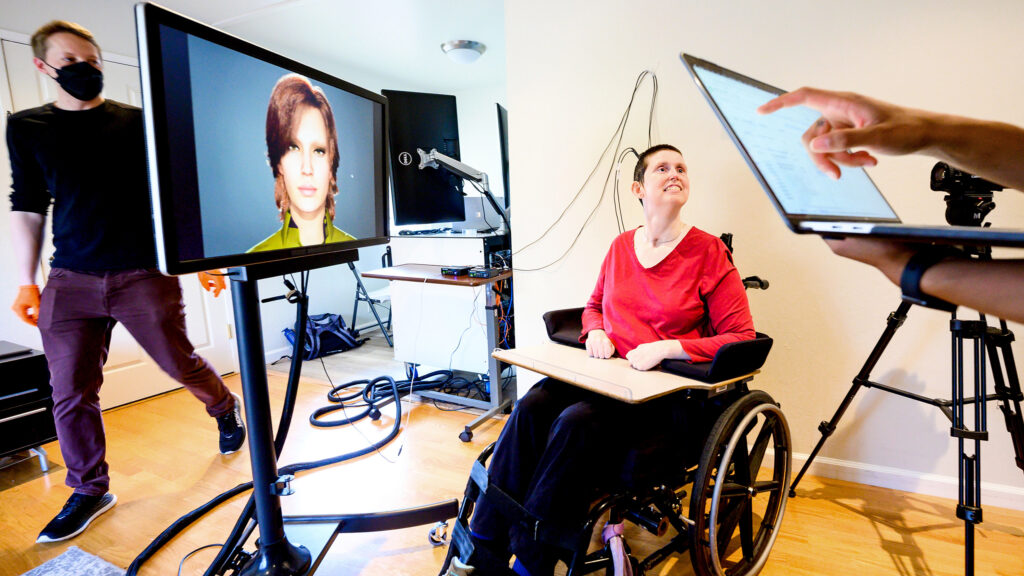
Perhaps the most transformative breakthrough has been in decoding intended speech. Scientists at the University of California, San Francisco, developed a system that translates brain signals directly into text, allowing paralyzed patients to communicate at speeds approaching normal conversation. The system uses electrode arrays placed on the brain surface to detect the neural activity associated with attempting to speak.
In one remarkable demonstration, a patient who had been unable to speak for over 15 years successfully communicated full sentences by thinking the words. The system decoded her intended speech with over 90% accuracy at a rate of 18 words per minute—a dramatic improvement over previous technologies that required painstaking letter-by-letter selection.
Emotional State Recognition
Beyond words and images, researchers are now decoding emotions and mental states. Studies using machine learning to analyze EEG data can identify whether someone is experiencing anxiety, focus, frustration, or relaxation with significant accuracy. This technology has potential applications in mental health diagnosis and treatment, as well as in creating more responsive human-computer interfaces.
The Technology Stack Behind Thought Decoding 💻
Understanding how thought decoding works requires examining the technological ecosystem that makes it possible. This system combines hardware for capturing brain signals, software for processing data, and AI models for interpretation.
Signal Acquisition Technologies
The first challenge is capturing meaningful brain data. Non-invasive methods like EEG offer portability and safety but provide limited spatial resolution. They excel at detecting rapid temporal changes in brain activity but struggle to pinpoint exactly where signals originate.
Invasive approaches like ECoG offer dramatically better signal quality and spatial precision. By placing electrodes directly on the brain surface, researchers can detect the activity of specific neural populations. However, these methods require neurosurgery, limiting their use primarily to patients already undergoing brain procedures for medical reasons.
Emerging technologies are seeking middle ground. Functional near-infrared spectroscopy (fNIRS) uses light to measure brain activity non-invasively with better spatial resolution than EEG. Novel electrode designs promise improved signal quality without invasive surgery.
Computational Processing Pipeline
Raw brain signals are noisy and complex, containing information about numerous simultaneous mental processes. Sophisticated signal processing techniques extract meaningful patterns from this chaos. Filters remove artifacts from muscle movements, eye blinks, and environmental interference. Feature extraction algorithms identify relevant characteristics of the signals that correlate with specific mental states.
The processed data then feeds into machine learning models—typically deep neural networks trained on thousands of hours of labeled brain activity. These models learn the mapping between neural patterns and their corresponding thoughts or intentions. As more data becomes available, the models improve, achieving ever-greater accuracy.
Real-World Applications Transforming Lives 🌟
The practical applications of thought decoding extend across medicine, technology, and human enhancement. These aren’t distant possibilities—many are already being tested in clinical settings and early-stage products.
Restoring Communication to the Paralyzed
The most immediate and impactful application addresses one of medicine’s most challenging problems: restoring communication to people with severe paralysis. Conditions like amyotrophic lateral sclerosis (ALS), stroke, and spinal cord injuries can leave patients fully conscious but unable to speak or move—a state called locked-in syndrome.
Brain-computer interfaces using thought decoding offer these patients a lifeline. By detecting the neural signals associated with intended speech or movement, these systems can translate thoughts directly into text or synthetic speech. Several patients have already used these technologies to communicate with loved ones, express their needs, and regain a measure of independence.
Enhanced Prosthetic Control
Modern prosthetic limbs are engineering marvels, but controlling them intuitively remains challenging. Thought decoding promises to change this by creating prosthetics that respond to neural signals just as natural limbs do. Patients can think about moving their prosthetic hand, and advanced systems decode these intentions and execute the movements in real-time.
Researchers have demonstrated prosthetic hands capable of individual finger control, adjusting grip strength, and even providing sensory feedback to the user—all controlled by decoded brain signals. This closed-loop system, where the brain both controls the prosthetic and receives sensory information from it, represents a quantum leap in prosthetic technology.
Mental Health Monitoring and Treatment
Thought decoding technology offers new approaches to understanding and treating mental health conditions. By continuously monitoring brain states, wearable devices could detect the onset of depression, anxiety attacks, or other mental health crises, potentially allowing for early intervention.
Neurofeedback therapy, which uses real-time brain activity feedback to help patients learn to regulate their mental states, becomes dramatically more effective with accurate thought decoding. Patients can see objective measures of their brain activity and learn techniques to shift toward healthier patterns.
Gaming and Virtual Reality Interfaces
The gaming industry has begun exploring brain-computer interfaces as the next frontier in immersive experiences. Imagine controlling game characters with thought alone, or having virtual environments respond to your emotional state. Several companies are developing consumer-grade EEG headsets that offer basic thought control of applications and games.
While current consumer devices have limited capabilities compared to research-grade systems, they represent the first steps toward mainstream thought-controlled interfaces. As the technology matures and becomes more affordable, we may see thought control become a standard input method alongside keyboards and touchscreens.
Ethical Considerations and Privacy Concerns 🔐
With the ability to decode thoughts comes profound ethical responsibility. The technology raises questions about mental privacy, consent, and the very nature of personal autonomy that society must address before widespread deployment.
The Right to Mental Privacy
If our thoughts can be decoded, do we have a right to keep them private? Current legal frameworks around privacy were not designed with direct brain reading in mind. As thought decoding becomes more accurate and accessible, we need new legal protections ensuring that no one can be forced to reveal their thoughts involuntarily.
The potential for abuse is significant. Could employers use thought decoding to monitor worker attention? Might law enforcement seek to use it for interrogations? Could advertisers decode consumers’ genuine reactions to products? These scenarios require careful regulation to prevent the technology from becoming a tool of coercion or manipulation.
Informed Consent and Vulnerable Populations
Obtaining truly informed consent for thought decoding research and applications presents unique challenges. How can we ensure that patients with severe disabilities, who stand to benefit most from the technology, aren’t pressured into using systems that compromise their mental privacy? What safeguards prevent the technology from being used on individuals unable to consent?
The medical applications of thought decoding often involve patients with limited communication abilities, making consent particularly complex. Rigorous ethical frameworks must be developed to protect these vulnerable populations while still allowing them access to life-changing technologies.
Data Security and Neural Hacking
Brain data represents perhaps the most personal information imaginable. Securing this data against unauthorized access is paramount. A “neural data breach” could expose not just facts about someone but their innermost thoughts, feelings, and memories. The cybersecurity challenges are unprecedented.
Furthermore, as brain-computer interfaces become bidirectional—both reading from and writing to the brain—the possibility of “neural hacking” emerges. Could malicious actors manipulate someone’s thoughts or perceptions by interfering with their brain-computer interface? These science-fiction scenarios require serious security consideration as the technology advances.
The Road Ahead: Challenges and Opportunities 🚀
Despite remarkable progress, significant challenges remain before thought decoding achieves its full potential. Overcoming these obstacles will require continued innovation across multiple disciplines.
Improving Accuracy and Generalization
Current thought decoding systems require extensive calibration for each individual user. The patterns of neural activity that represent a particular thought can vary significantly between people. Developing systems that work accurately across diverse populations without lengthy training periods remains a major challenge.
Researchers are exploring transfer learning approaches, where models trained on large datasets can be quickly adapted to new users. Others are investigating whether there are universal neural patterns that transcend individual differences, which could enable more generalizable decoding systems.
Reducing Invasiveness
The most accurate thought decoding systems currently require invasive brain surgery. Expanding access to these technologies demands developing non-invasive or minimally invasive methods that approach the signal quality of implanted electrodes. Several promising approaches are under investigation, including improved external sensors, ultrasound-based techniques, and injectable neural dust—tiny wireless sensors that could be introduced with minimal surgery.
Real-Time Processing and Latency
For thought decoding to enable natural communication and control, the delay between thinking and system response must be minimized. Current systems can have latencies of several seconds while processing complex brain signals. Advancing to truly real-time decoding requires both faster algorithms and more efficient hardware implementations.
Edge computing solutions, where processing occurs on device rather than in the cloud, promise to reduce latency. Specialized neural processing chips designed specifically for brain signal interpretation could dramatically accelerate decoding speed.
Converging Frontiers: AI and Neuroscience 🤝
The relationship between artificial intelligence and thought decoding is symbiotic. AI makes thought decoding possible, while brain research informs the development of more sophisticated AI architectures. This convergence is accelerating progress in both fields.
Insights from how the brain encodes information are inspiring new AI architectures that more closely mimic biological neural networks. Meanwhile, the tools AI researchers develop for processing complex data find immediate application in analyzing brain signals. This virtuous cycle is pushing both disciplines forward at an unprecedented pace.
Some researchers envision a future where AI systems can interface directly with human thought, augmenting our cognitive abilities. Imagine instantly accessing information from the internet through thought alone, or sharing complex ideas directly from one brain to another mediated by AI translation. While these scenarios remain speculative, the foundational technologies are being developed today.
Reshaping Human Experience and Capability 🌈
As thought decoding technology matures, it will fundamentally alter what it means to be human. The boundary between mind and machine will become increasingly permeable, opening possibilities both exhilarating and unsettling.
Communication could transcend the limitations of language, with thoughts transmitted directly between minds. People with disabilities could interact with the world in ways previously impossible. Our cognitive abilities could be enhanced through direct neural interfaces with powerful computing systems. Education might involve directly encoding knowledge into neural patterns rather than traditional learning methods.
These transformations raise profound philosophical questions. If we can augment our minds with artificial systems, what remains distinctly human? How do we ensure equitable access to cognitive enhancement technologies? What happens to human identity when thoughts can be directly shared or modified?
The answers to these questions will shape the future of human civilization. As we stand at the threshold of this new era, thoughtful consideration of both the opportunities and risks becomes essential. The power to decode and potentially influence thought is perhaps the most significant technological capability humans have ever developed.
The breakthroughs in real-time thought decoding research represent more than scientific achievement—they mark the beginning of a fundamental shift in the human condition. By responsibly developing and deploying these technologies with appropriate ethical safeguards, we have the opportunity to alleviate suffering, enhance human capability, and unlock new dimensions of human experience. The power of the mind, long mysterious and hidden, is finally being unleashed—not to constrain human potential, but to expand it in ways our ancestors could never have imagined.
