
Artificial intelligence is transforming the landscape of neuroprosthetics, offering unprecedented hope to millions living with mobility impairments and neurological conditions worldwide.

The convergence of neuroscience, robotics, and machine learning has ushered in a new era of rehabilitation technology. Traditional prosthetic devices, once limited to basic mechanical functions, are now evolving into sophisticated systems that can interpret neural signals, adapt to user intentions, and restore lost capabilities with remarkable precision. This technological revolution is not merely about replacing lost function—it’s about enhancing human potential and redefining what’s possible in medical rehabilitation.
For decades, individuals with spinal cord injuries, stroke survivors, and amputees have faced significant challenges in regaining independence. Conventional rehabilitation methods, while valuable, often reach a plateau in their effectiveness. AI-assisted neuroprosthetics represent a paradigm shift, offering dynamic, personalized solutions that learn and improve over time, adapting to each user’s unique neural patterns and physical needs.
🧠 Understanding the Neural Interface Revolution
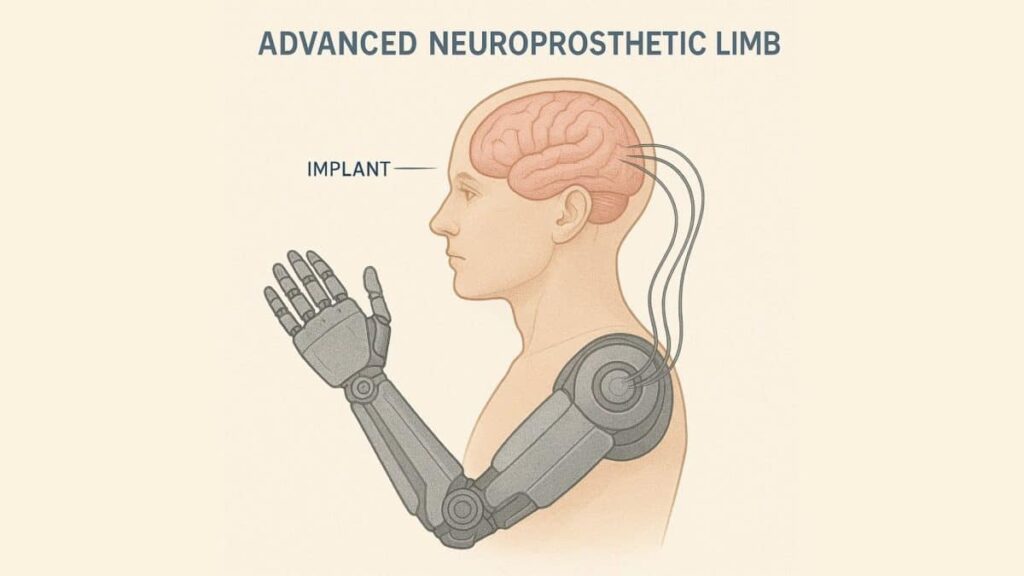
At the heart of AI-assisted neuroprosthetics lies the brain-computer interface (BCI), a technology that creates direct communication pathways between the human nervous system and external devices. These interfaces capture electrical signals from neurons, translating thoughts and intentions into actionable commands that control prosthetic limbs, exoskeletons, or computer systems.
The integration of artificial intelligence amplifies the capabilities of these interfaces exponentially. Machine learning algorithms can decode complex neural patterns with increasing accuracy, distinguishing between subtle variations in brain activity that correspond to different intended movements. This level of precision was unimaginable just a decade ago, when prosthetic control relied primarily on residual muscle signals or simple switch mechanisms.
Modern neuroprosthetic systems employ multiple types of neural recording methods. Invasive techniques involve surgically implanted electrodes that capture signals directly from the motor cortex, offering high-resolution data but requiring surgical procedures. Non-invasive approaches use electroencephalography (EEG) sensors placed on the scalp, providing a safer alternative with slightly reduced signal quality. Recent advances in AI have dramatically improved the effectiveness of non-invasive methods, making sophisticated neuroprosthetic control accessible to a broader patient population.
Machine Learning: The Intelligence Behind Movement
The true power of AI in neuroprosthetics emerges through advanced machine learning algorithms that continuously analyze and interpret neural data. Deep learning networks, particularly convolutional neural networks (CNNs) and recurrent neural networks (RNNs), excel at identifying patterns within the noisy, complex signals generated by the human brain.
These algorithms undergo extensive training periods, during which they learn to associate specific neural activation patterns with intended movements or actions. The training process typically involves the user imagining or attempting movements while the system records corresponding neural signals. Over time, the AI becomes increasingly accurate at predicting user intentions, often achieving success rates exceeding 90% for basic movement commands.
What distinguishes AI-assisted systems from traditional approaches is their adaptive nature. The algorithms don’t remain static after initial training—they continue learning throughout daily use, refining their predictions based on ongoing feedback. This adaptive capability means the prosthetic device becomes more intuitive and responsive over time, essentially growing with the user’s rehabilitation progress.
Real-Time Processing and Predictive Capabilities
One of the most impressive achievements in AI-assisted neuroprosthetics is the ability to process neural signals in real-time with minimal latency. Advanced edge computing solutions enable processing to occur directly within the prosthetic device itself, reducing the delay between thought and action to mere milliseconds. This responsiveness is crucial for natural movement execution and user satisfaction.
Furthermore, predictive algorithms can anticipate user intentions based on context and historical patterns. If a user typically reaches for a glass after certain preparatory movements, the system can begin pre-positioning the prosthetic hand to facilitate a smoother, more natural grasping motion. This predictive capability creates a more seamless integration between human intention and mechanical action.
🦾 Transforming Lives Through Advanced Prosthetics
The practical applications of AI-assisted neuroprosthetics have already transformed countless lives. Upper limb prosthetics equipped with AI can now perform delicate tasks that were previously impossible, from typing on a keyboard to playing musical instruments. Users report experiencing a sense of embodiment—feeling that the prosthetic limb is truly part of their body rather than an external tool.
Lower limb neuroprosthetics and exoskeletons powered by AI are enabling individuals with paraplegia to stand, walk, and navigate complex environments. These systems analyze terrain, adjust gait patterns in real-time, and provide stability assistance, reducing the risk of falls while maximizing energy efficiency. Some advanced systems integrate predictive algorithms that anticipate obstacles and adjust movement patterns proactively.
Beyond limb replacement, neuroprosthetic technology is restoring other critical functions. AI-assisted systems are helping restore bladder control, regulate blood pressure, and even facilitate respiratory function in individuals with high-level spinal cord injuries. These applications extend far beyond mobility, addressing fundamental quality-of-life issues that significantly impact long-term health outcomes.
Sensory Feedback: Closing the Loop
One of the most significant recent advances involves bidirectional communication—not only sending commands from brain to device but also transmitting sensory information back to the nervous system. AI plays a crucial role in encoding tactile, proprioceptive, and force feedback in ways the brain can interpret naturally.
When a user with an AI-assisted prosthetic hand grasps an object, pressure sensors in the artificial fingers send data to algorithms that translate this information into electrical stimulation patterns delivered to sensory nerves. The brain interprets these signals as touch sensations, providing crucial feedback that enables more precise manipulation and creates a more complete sense of embodiment.
This sensory feedback loop has profound implications for rehabilitation outcomes. Studies demonstrate that users with sensory-enabled prosthetics show faster learning curves, greater device acceptance, and reduced phantom limb pain compared to those using traditional prosthetics without sensory feedback capabilities.
Accelerating Recovery Through Neuroplasticity
AI-assisted neuroprosthetics don’t just compensate for lost function—they actively promote neurological recovery by harnessing the brain’s natural capacity for neuroplasticity. When users engage with these systems, they’re not passively receiving assistance; they’re actively training their nervous systems to form new neural pathways and strengthen existing ones.
The rehabilitation process becomes a collaborative effort between patient, therapist, and intelligent technology. AI systems track progress with unprecedented detail, identifying subtle improvements that might escape human observation. These insights allow therapists to optimize rehabilitation protocols, adjusting difficulty levels and exercise parameters to maintain optimal challenge without causing frustration or fatigue.
Gamification elements integrated into AI-assisted rehabilitation systems increase engagement and motivation. Users might complete virtual reality tasks that simultaneously provide meaningful therapy and entertaining challenges. The AI adjusts difficulty dynamically, ensuring exercises remain appropriately challenging as capabilities improve, maintaining the optimal zone for neuroplastic adaptation.
📊 The Clinical Evidence Supporting AI Integration
Clinical research increasingly validates the superiority of AI-assisted neuroprosthetics over traditional approaches. Controlled studies demonstrate statistically significant improvements in functional outcomes, user satisfaction, and independence levels among individuals using AI-enabled devices compared to conventional prosthetics or rehabilitation methods.
Long-term studies reveal sustained benefits extending years after initial training. Users of AI-assisted systems show continued functional improvements, suggesting ongoing neuroplastic adaptation facilitated by the intelligent, adaptive nature of these devices. This contrasts with traditional approaches, where functional gains often plateau within the first year of rehabilitation.
Meta-analyses examining multiple studies across different patient populations consistently show that AI integration enhances rehabilitation outcomes across diverse conditions, including stroke, spinal cord injury, traumatic brain injury, and limb loss. The evidence base continues expanding as more institutions adopt these technologies and contribute data to collaborative research initiatives.
Personalization Through Data Analytics
AI systems excel at personalization, analyzing vast amounts of individual user data to optimize device parameters for each person’s unique physiology and preferences. Traditional prosthetics offer limited customization options, typically requiring manual adjustments by clinicians during periodic appointments. AI-enabled devices continuously self-optimize, making thousands of micro-adjustments daily based on real-time performance data.
This personalization extends beyond movement control to encompass factors like energy consumption, comfort optimization, and predictive maintenance. The system learns patterns that might indicate developing issues—unusual battery drain, inconsistent sensor readings, or biomechanical inefficiencies—and alerts users or clinicians before problems become serious, minimizing downtime and maximizing device reliability.
Overcoming Implementation Challenges 🚀
Despite remarkable progress, significant challenges remain in bringing AI-assisted neuroprosthetics to widespread clinical adoption. Cost represents a substantial barrier, with advanced systems often exceeding $100,000, placing them beyond reach for many who could benefit. However, economies of scale, manufacturing improvements, and increased competition are gradually reducing prices, making these technologies more accessible.
Technical challenges persist in areas like battery life, device durability, and signal reliability. Neural signals can be affected by factors ranging from fatigue and stress to environmental electromagnetic interference. AI algorithms must remain robust across these varying conditions, maintaining consistent performance despite signal quality fluctuations.
Regulatory pathways for AI-enabled medical devices remain complex and evolving. Regulators must balance the need for rigorous safety validation with the recognition that AI systems improve continuously through learning. Traditional regulatory frameworks designed for static medical devices don’t naturally accommodate technologies that change over time, necessitating new regulatory approaches that ensure safety without stifling innovation.
Ethical Considerations in Neural Technology
The intimate connection between brain and machine raises important ethical questions. Issues of data privacy become particularly sensitive when the data in question represents neural activity—arguably the most personal information possible. Who owns neural data? How should it be protected? Can insurance companies or employers access this information? These questions require thoughtful answers as technology advances.
The potential for enhancement beyond restoration also generates ethical discussions. If technology can restore normal function, should it also be used to create superhuman capabilities? How do we ensure equitable access to these life-changing technologies? These philosophical and practical questions will shape how neuroprosthetic technology develops and is deployed in coming decades.
The Future Landscape of Neural Rehabilitation
Looking ahead, several emerging trends promise to further revolutionize neuroprosthetic technology. Wireless power transfer may eliminate the need for batteries or frequent recharging, addressing a major practical limitation. Advanced materials science is producing biocompatible neural interfaces that minimize immune responses and maintain signal quality over decades rather than months.
Cloud computing and federated learning approaches enable AI systems to learn not just from individual users but from aggregated data across thousands of patients while preserving privacy. This collective learning accelerates algorithm improvement, allowing each user to benefit from insights derived from the broader community of neuroprosthetic users.
Integration with other emerging technologies will expand capabilities further. Combining neuroprosthetics with augmented reality could provide visual guidance during rehabilitation exercises or overlay navigation information for powered wheelchairs. Integration with smart home systems could enable direct neural control of environmental features, from lighting to communication devices, maximizing independence.
From Laboratory to Living Room
Perhaps the most significant trend involves the transition from laboratory research and clinical settings to home-based rehabilitation and daily living. Telerehabilitation platforms incorporating AI allow users to continue therapy at home with remote supervision from clinicians. Machine learning algorithms analyze performance data, flagging concerns that require professional attention while confirming when progress is proceeding appropriately.
This shift democratizes access to specialized rehabilitation expertise. Individuals in rural areas or developing regions can access cutting-edge rehabilitation protocols without relocating near specialized centers. The AI serves as an always-available coach and companion, providing encouragement, tracking progress, and adjusting challenges to maintain optimal engagement.
Building an Inclusive Technological Future 🌟
As AI-assisted neuroprosthetics continue advancing, ensuring inclusive access remains paramount. Technology developers, clinicians, policymakers, and patient advocates must collaborate to create pathways that bring these innovations to all who need them, regardless of geographic location, socioeconomic status, or type of disability.
Education initiatives that train the next generation of rehabilitation professionals in AI-assisted technologies are essential. Clinicians need not become programmers, but they must understand how these systems work, their capabilities and limitations, and how to integrate them effectively into comprehensive rehabilitation programs.
Patient involvement in technology design and development ensures that resulting products truly meet real-world needs rather than merely demonstrating technical sophistication. User-centered design approaches that prioritize practical functionality, comfort, and aesthetic appeal over pure technical performance create devices that people actually want to use daily rather than abandoning in frustration.
The revolution in AI-assisted neuroprosthetics represents more than technological achievement—it embodies a fundamental shift in how we approach rehabilitation and human augmentation. By combining the adaptability of artificial intelligence with the resilience of the human nervous system, we’re creating tools that don’t just compensate for disability but actively promote healing, restore independence, and expand human potential. As these technologies mature and become more accessible, they promise to transform rehabilitation from a process of accepting limitations to one of discovering new possibilities.
